


That ol’ gray mare called American independent wrestling ain’t what she used to be. One could argue that the American indie scene suffered under the same forces that enshittified bowling, movie and television, books, food and restaurant service, healthcare, and news reporting. If I can cosplay as the Communist Aarons for a moment, I’d highlight that the consolidation of markets has degraded the consumer experience in all of those areas and more.
Wrestling was not immune to the effect of these forces. As AEW, WWE, and TNA vie for market share, they’ve impressed a homogenized style on to companies that are lower on the food chain. Wrestlers would prefer that the indies resemble the larger companies so that scouts could more easily envision their fit. Customers would be accustomed to how the larger companies present their product and expect even the indies to match the production styles.
(My theory for why grapplefuck and deathmatch wrestling have their occasional moments in the sun was based on the idea that they represent extreme facets of professional wrestling that the major powers can dabble in but can’t ever feature as their primary style. AEW might be able to hold Texas Deathmatches on PPV and even bloodbaths on their flagship program, Dynamite, but they can’t schedule 10,000 light tube and nail board matches regularly.)
Back in the early 2000s, the comics creators/fans on the Warren Ellis Forum gathered together to discuss and create comics under the banner of “Defend comics.” They had shared a general contempt of mainstream “capes” comics, which they blamed for the lack of diversity of comics in the marketplace. For every fifth comic in the X-Men or Batman line from Marvel or DC, they would contend, there would be one fewer slot on a store’s shelf for a comic from a different genre, like crime, all-ages comedy, or romance. The charge, therefore, was to go forth, make comics, and defend the idea that comics could be more than just “capes books.”
(And just like you should with professional wrestling, you should search for information about Warren Ellis before you become too enamored. Nonetheless, I reject the idea that his awfulness nullified the idea that artists should push the boundaries of their art medium of choice. “Defend comics” is bigger than Warren Ellis.)
Just as comics creators needed to create a space apart from the major publishers so they could “defend comics,” so do wrestling promoters who want to uphold legacies of bygone distinct regional styles of wrestling need to do it themselves. So, I think it’s worthwhile to check in on the indies regularly. Right now, the companies in the New Initiative (St. Louis Anarchy, West Coast Pro Wrestling, New Texas Pro Wrestling, ACTION Wrestling, and PrideStyle) have my attention. They and some others (Pandemonium Pro Wrestling, Limitless Wrestling, Absolute Intense Wrestling, and AAW) will continue to pique my interest until they give me a reason to drop them from my sight. And I hope that DEFY Wrestling, Combat Zone Wrestling, and IWA-Mid South return to the sun some day. Defend wrestling!
In this edition, I covered:
- Jonathan Gresham vs. Masashi Takeda (GCW, June 6, 2026)
- Jeremy Wyatt vs. Adam Priest (SLA, May 29, 2026)
- Jesse Funaki vs. Erick Stevens (New Texas Pro, May 24, 2026)
- Sinner and Saint (Judas Icarus & Travis Williams) vs. The Rogues (Casey Ferreira & Elliot Tyler) (365, May 8, 2026)
- Dan Archer vs. Randy Chambers (SLAM!, June 13, 2026)
- Tarlee (c) vs. Aysha (ROW, April 4, 2026)
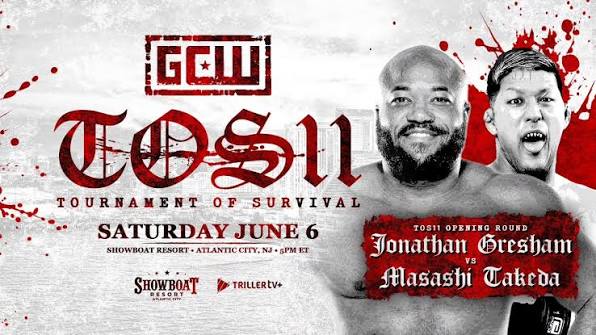
Jonathan Gresham vs. Masashi Takeda
GCW Tournament of Survival 11
June 6, 2026
Cagematch ranking as of 7/1/26: 68
Cagematch rating as of 7/1/26: 8.45
I wonder if every wrestling fan goes through a deathmatch wrestling phase at some point. It pinged my radar a few times. The first was the late 2000s, when I was drinking directly from the wrestling hose and tried to watch everything. That included IWA-DS, which got me in with matches like Mike Quackenbush vs. Jimmy Rave and Larry Sweeney vs. Mickie Knuckles. Ultimately, it proved to be a poor substitute for IWA-MS, so I moved on before their Carnage Cup could really hook me to become a deathmatch fiend.
I had my period where Necro Butcher seemed like the greatest thing since sliced bread or Sliced Bread No. 2, and I doubt that I was alone in that thinking. Necro Butcher wasn’t on the IWA-DS shows that I sampled, but he was applying his talents to IWA-MS. I probably first saw Necro Butcher in action against Samoa Joe in the infamous 2005 match from IWA-MS Something to Prove, the subject of a recent episode of Dark Side of the Ring. Though Necro Butcher started wrestling in 1998, the path to his appearance in Darren Aronofsky’s The Wrestler and his brief period as “Hollywood” Dylan Summers didn’t start until the ROH vs. CZW feud in 2006, which led to his joining ROH in 2007. And he was a reason to stick around ROH after the company fired Gabe Sapolsky.
I followed Necro to Full Impact Pro for his matches with and without Mad Man Pondo against Jay and Mark Briscoe, and I was impressed when Necro wrestled in the 2007 and 2008 Battle of Los Angeles. At the time, wrestling in BOLA felt like a stamp of approval and a sign that a wrestler had arrived. Necro appeared in Darren Aronofsky’s The Wrestler as himself, and that kicked off the short period of “Hollywood” Dylan Summers. By the 2010s, Necro and deathmatch wrestling in general faded again from my attention.
In 2018, Masashi Takeda’s famous match against Isami Kodaka, which placed at #7 in Voices of Wrestling’s 2018 Match of the Year poll, inspired me to dig into his backlog, and I made time for his matches whenever they penetrated the discourse. For example, Takeda’s match against Yusaku Ito in 2024 got some attention as one of the best deathmatches in a while, and I thought that Takeda was again very good in the match. However, I remained more of a Strong BJ guy than a BJW deathmatch guy, and watching Takeda never became a habit.
Around 2022, enthusiasm about Big F’n Joe that I absorbed by osmosis and the fact that Neil Diamond Cutter was a great name led me to ICW No Holds Barred. The company’s stripped down aesthetic, enthusiastic crowd, and unique venues (the Ultimate Fitness gym in Queens, NY, a parking lot in Atlantic City, the Southwind Vineyard in Millville, NJ) got my attention. I remember watching Shane Douglas, of all people, wrestle Danny Demanto at ICW No Holds Barred Volume 21. However, the novelty wore off soon after, and Big F’n Joe went back to England, so I moved on again.
Last year, I debated taking a detour to discuss El Desperado’s deathmatches with Jun Kasai in the column and found, upon starting El Desperado’s match against Kasai and Takeda, that I felt no enthusiasm for watching it. That was a sign to let it go even though it was a major part of the story of professional wrestling in 2025.
So, even though deathmatch wrestling never truly drew me in, I was always willing to give it a shot, especially if it involved Takeda. Furthermore, the idea that Jonathan Gresham, the former ROH Pure Champion, the champion of pure, technical wrestling, wrestled in a deathmatch after he recovered from suffering two strokes in 2025 confused me greatly. I was confident that Takeda and Gresham could put together a good deathmatch; they wrestled in 2019 at a Bloodsport show, and they leaned into the fake MMA fight idea in that match. So, I was confident that they had good chemistry, but was doubtful that Gresham would perform well in a zone that seemed antithetical to his values as a wrestler. As a result, I had to know.
(And yes, Gresham wrestled a Four Way Boards Of Nails Carpet Stripes Pains Of Glass Deathmatch for the CZW World Heavyweight title in 2016, but that was practically a lifetime ago.)
As I expected, Gresham and Takeda played with the idea that Gresham was firmly out of his element in a deathmatch tournament almost from the start. Gresham took Takeda down fairly limply a couple of times, which was enough to annoy Takeda into smashing a bundle of light tubes on the mat. Gresham and Takeda grappled again, and we paid off the idea of Gresham swimming in unfamiliar waters early in the match when Takeda knocked Gresham down back first on to the glass debris with a shoulder block. I thought that Takeda and Gresham could have milked the suspense from Gresham’s foray into deathmatch antics a little longer. A shoulder block on to a pile of glass seemed too understated for what should have been one of the biggest moments of the match.
Since the octopus had been let out of the bag, Takeda and Gresham went fully into the deathmatch zone. Takeda stabbed Gresham in the forehead with his comically large scissors and forced him to bite down on a light tube, spraying glass into his mouth and at the camera. That, admittedly, was a very cool visual. Gresham retaliated by smashing a light tube over Takeda’s knee and jabbing at it with the broken tube. He then decided to lock Takeda down in a Figure Four, and I wish Gresham chose a submission hold where he would be elevated above the glass bits on the mat to reinforce the idea that he wanted to avoid the pain from glass digging into his skin.
Equally trapped in the Figure Four, Takeda and Gresham rolled out of the ring to let the fall break the hold. Takeda chased Gresham back into the ring with a light tube and dared him to face him in a light tube duel. He gave Gresham the first shot, but Gresham flinched when Takeda returned fire, so Takeda had to force the issue with a headbutt.
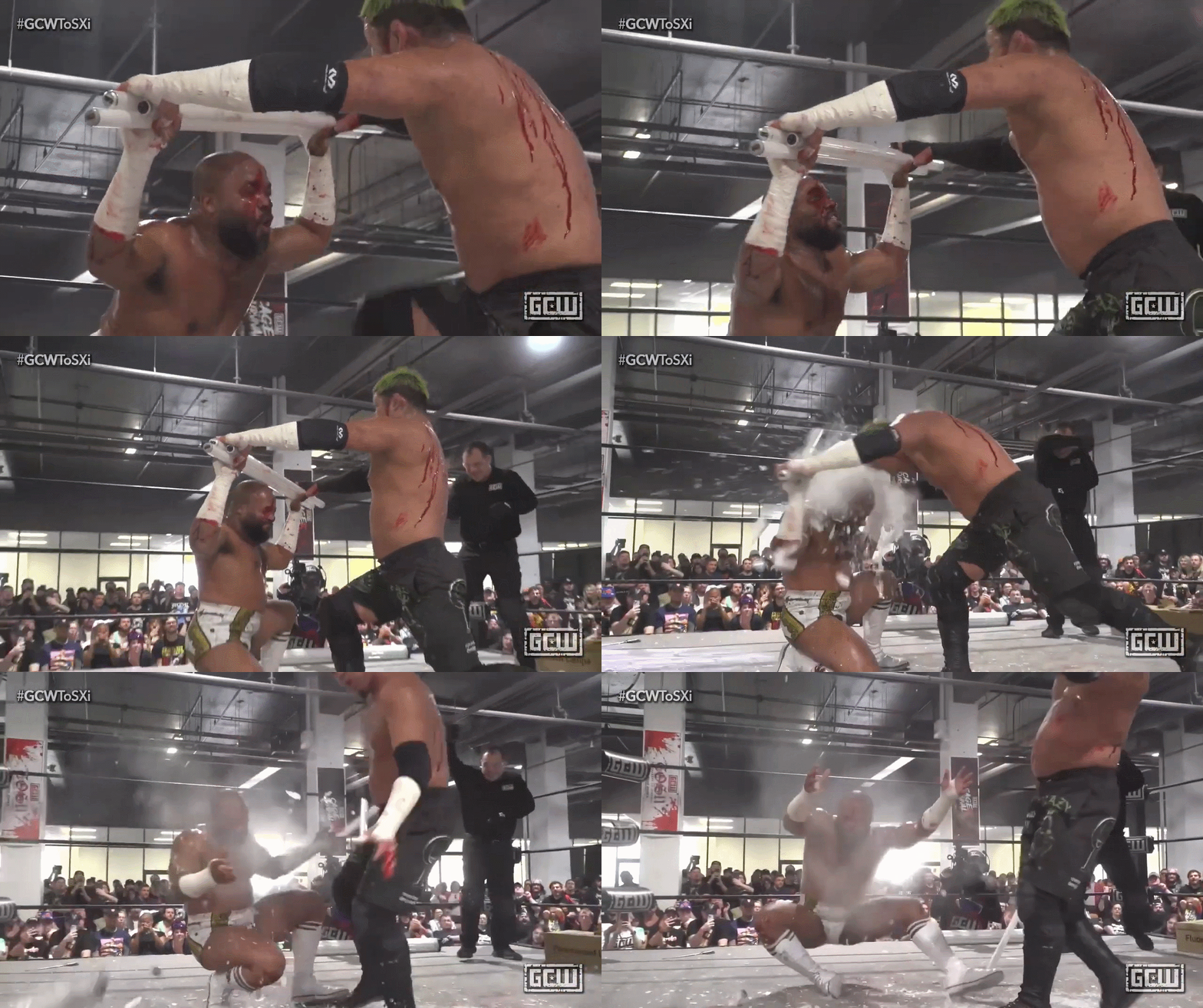
Trying to escape the light tube duel turned the crowd against Gresham because they perceived cowardice; thus, the crowd was on Takeda’s side during their strike duel. Gresham tried to finish Takeda with a Shooting Star Press, but Takeda pulled a bundle of light tubes over his chest and groin. As a result, Gresham was staggered by landing on the light tubes, and he seemed weakened by blood loss in the forearm strike battle with Takeda. Takeda handed Gresham another bundle of tubes and smashed it with a running knee attack that looked great in the moment. Takeda and Gresham had one more strike battle before Takeda dropped Gresham into an empty light tube box with the Reverse U-Crash, a lifting reverse DDT.
There were great moments that worked in isolation, like Takeda headbutting the light tubes against Gresham’s head, Takeda using a bundle of light tubes to make Gresham pay for the Shooting Star Press, and Takeda smashing the bundle of light tubes against Gresham with his running knee strike. I would have preferred if Gresham had managed to use his technical abilities to get through his side of the Tournament of Survival without engaging in deathmatch shenanigans until Takeda dragged him into the pool, but that probably would have annoyed the fans who attended the show to indulge their deathmatch appetites. I thought that they left meat on the metaphorical bone by pulling the light tubes out so quickly in the match, and Gresham wasn’t consistent about how afraid of or pained by the glass on the mat. Ultimately, Takeda and Gresham probably had a better deathmatch in them than this.
You can watch the match and the show on TrillerTV.
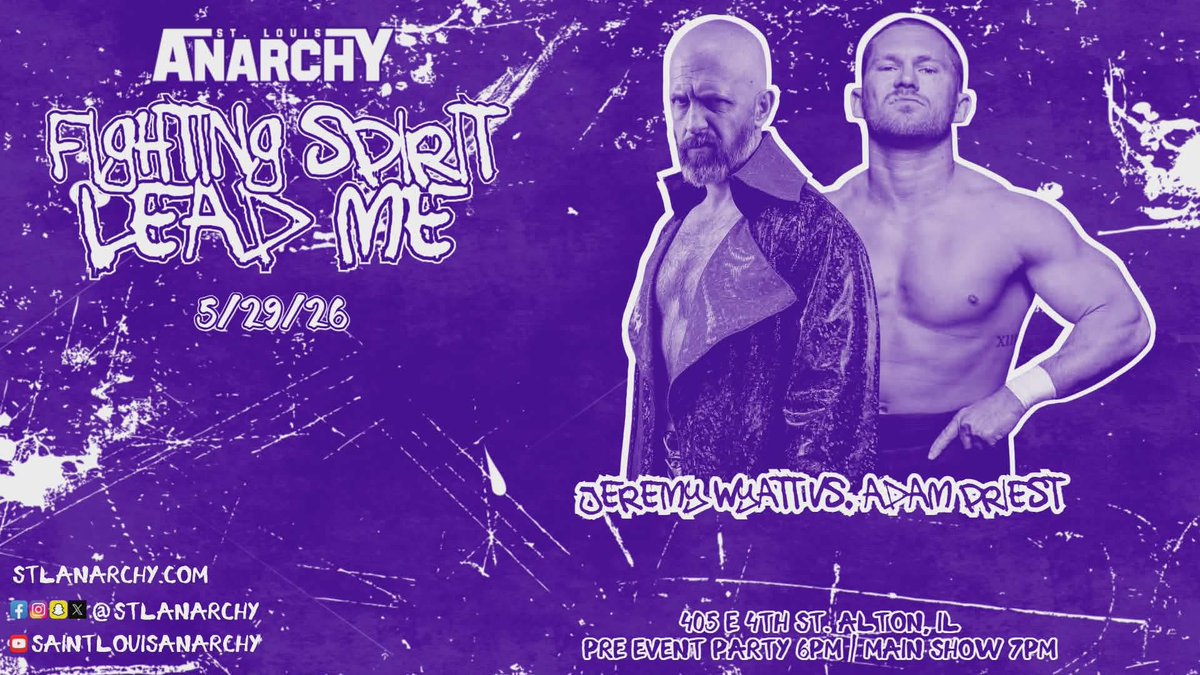
Jeremy Wyatt vs. Adam Priest
SLA Fighting Spirit Lead Me
May 29, 2026
Cagematch ranking as of 7/1/26: N/A
Cagematch rating as of 7/1/26: N/A
In the lead-up to this year’s WrestleMania Week, I had bolded and underlined St. Louis Anarchy’s advertised match of Jeremy Wyatt vs. Ryan Clancy as a potential highlight. Unfortunately, Ryan Clancy suffered injuries to his ACL and medial meniscus, and Wyatt faced Anakin Murphy instead for the Gateway Heritage Championship. That didn’t interest me as much, but SLA intrigued me again with Wyatt vs. Shimbashi, whom I had grown to enjoy after watching his work in New Texas Pro Wrestling. Wyatt’s bout with Shimbashi was good, but the announcement that Wyatt would face Adam Priest was even more intriguing, so I opted to focus on this match instead.
Wyatt has long been considered an underrated American indie wrestler. I would compare him to someone like Artemis Spencer or Adam Brooks, a staple of their local scene who became a veteran and potential mentor to the next generation of wrestlers. Priest, on the other hand, had become a fairly regular fixture in the Tony Khan Wrestling Universe after being one of the best parts of the much missed Deadlock Pro Wrestling and a delightfully awful villain when he appeared in smaller companies like New Texas Pro or West Coast Pro.
Priest, ever the heel, targeted a child sitting ringside for his ire at the start of the match. (I had hoped that Wyatt would hold Priest so the child could chop Priest across the chest, but it did not come to pass. That probably would have been too warm and cuddly for Wyatt anyway.) I know that we’re supposed to be play along and boo Priest, but it’s hard not to appreciate how well he played the jerk. Priest excelled at this even though he tended to be the smaller wrestler in his matches.
David Ricardo developed the economic theory of comparative advantage in 1817 to try to explain why countries engage in trade even when one country’s workers are more efficient at producing (in a hypothetical scenario) every possible good than workers in other countries. Ricardo’s theory was grounded in the idea of opportunity costs. Similarly, some wrestlers (Sammy Guevara, Maxwell Jacob Friedman, Randy Orton, and Adam Priest) have such a great comparative advantage over their peers in how easily they can play the heel that the effort necessary to then make them seem like the hero would present too great an opportunity cost for the company and the wrestlers. In other words, anyone who used “Dixieland Delight” as their entrance music should never play the face.
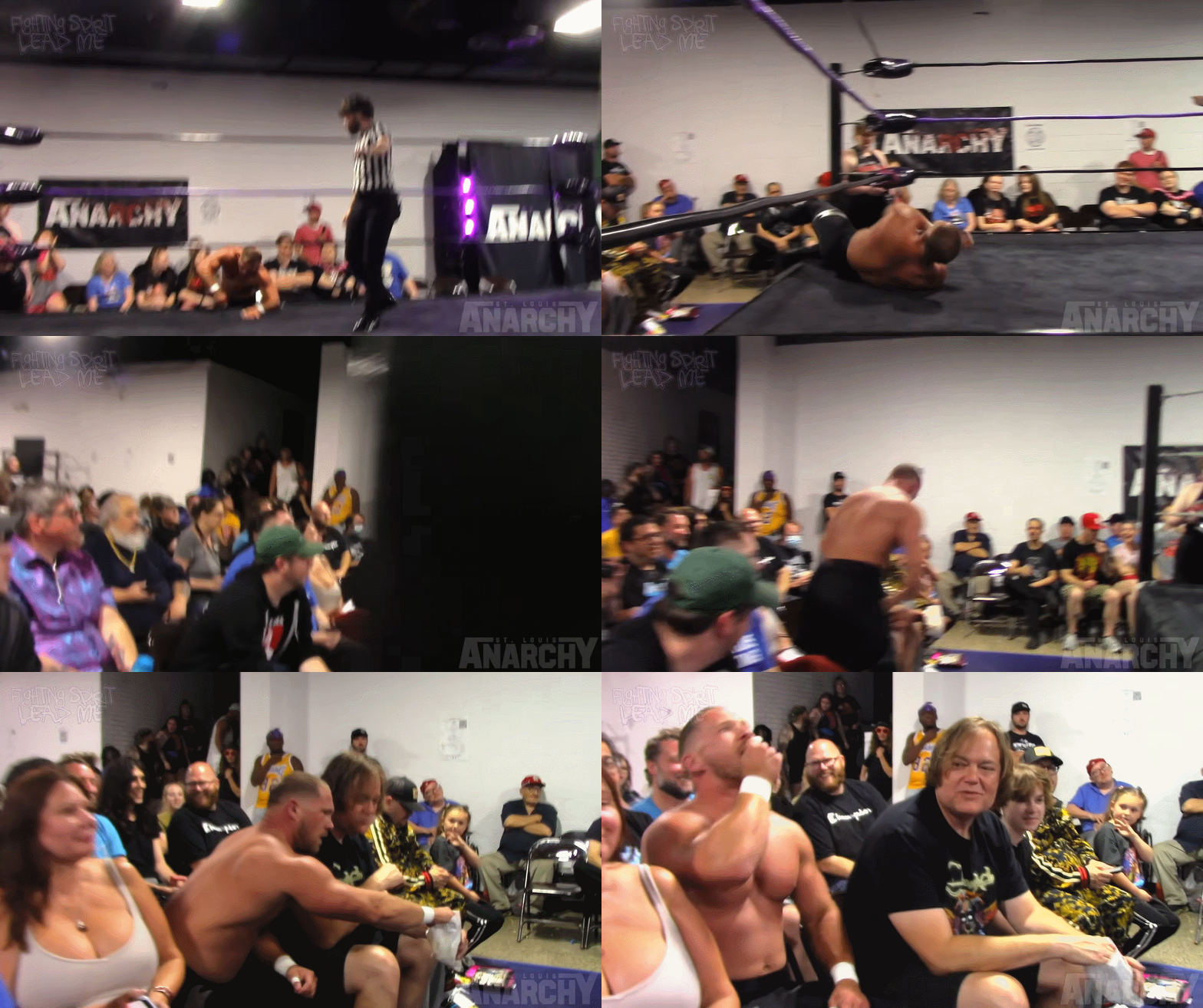
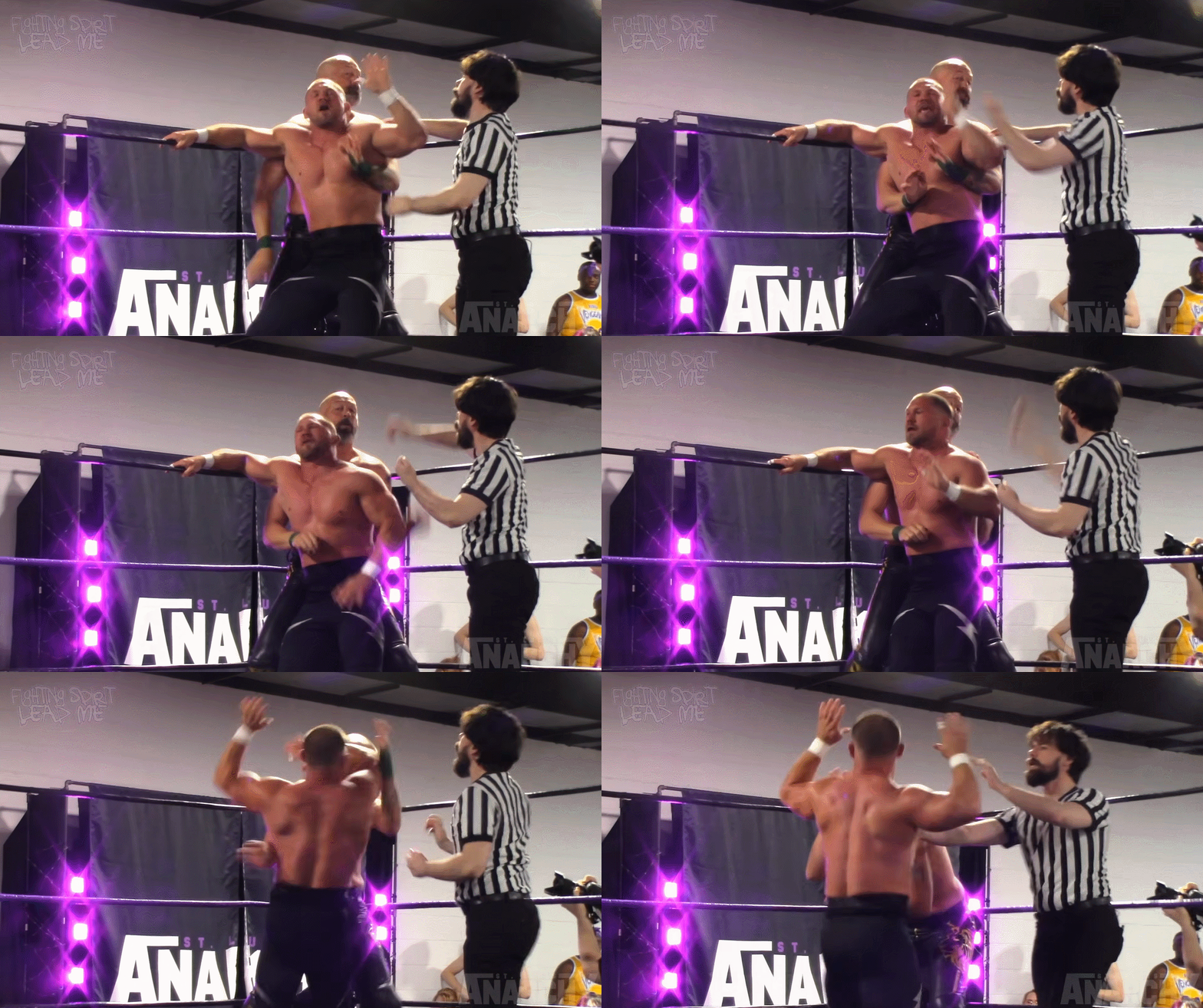
Of course, the stalling heel shtick would be just annoying if Priest couldn’t also wrestle when he needed to. He overwhelmed Wyatt on the mat by targeting Wyatt’s left leg. Sure, Priest stayed planted in the jerk store (which called, by the way, and said that they’re running out of you) by using the middle rope to help his attacks. However, the main point remained that Priest took it to Wyatt in where Wyatt was strong and controlled Wyatt through his own wrestling skills, not because he had a ring tucked away in his pants or because he had someone routinely attack Wyatt while the referee was distracted.
Given the match’s tone, Wyatt had to make the comeback by relying on his own technical prowess and by exploiting Priest’s mistakes. Wyatt used his legs to send Priest into the ringpost, which gave him enough breathing room to recover from Priest’s assaults. Back inside the ring, Wyatt again used Priest’s aggressiveness against him in the corner and was even fancy about it.
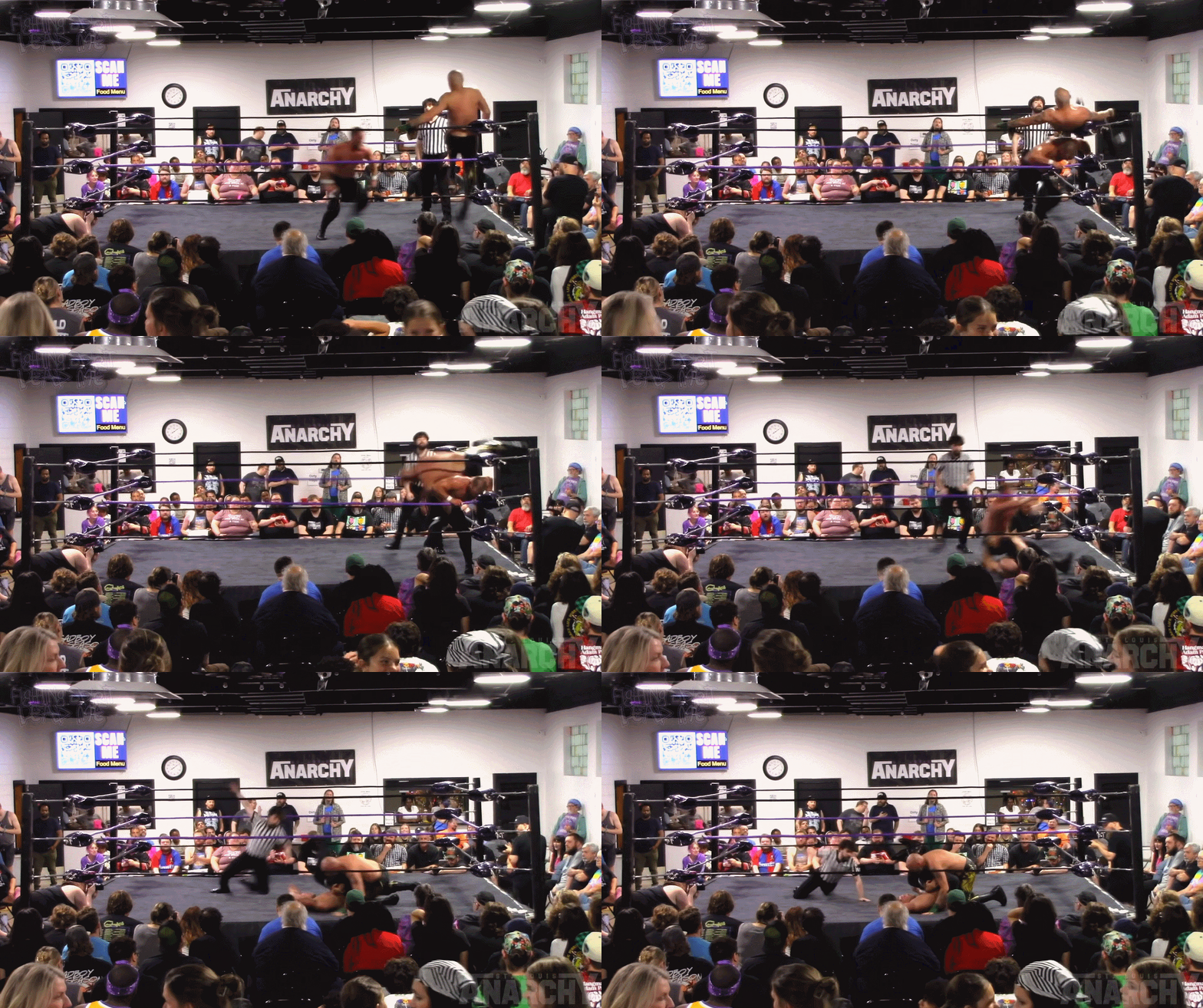
Wyatt and Priest traded control of the match for a little longer, which was mostly fine since Wyatt was still hobbled by his leg pain from Priest’s attacks. The end came suddenly when Wyatt dropped Priest with a piledriver after Priest tripped over the middle rope as he re-entered the ring, which left me feeling conflicted about the match. On one hand, it was appropriate that Priest got his comeuppance for all his stalling earlier in the match. On the other hand, the outcome felt random and anticlimactic; it wasn’t quite a win because Priest slipped on a banana peel, but it wasn’t far from it. Still, the match was serious and brisk, and it was a nice little treat.
Similar to the previous St. Louis Anarchy matches that I covered, this felt criminally underseen. It certainly deserved more than the 444 views on YouTube that the match had as of this writing.
You can watch the match on SLA’s YouTube page and the show on IWTV.
Jesse Funaki (c) vs. Erick Stevens
New Texas Pro Bat City 2
May 24, 2026
Cagematch ranking as of 7/1/26: N/A
Cagematch rating as of 7/1/26: N/A
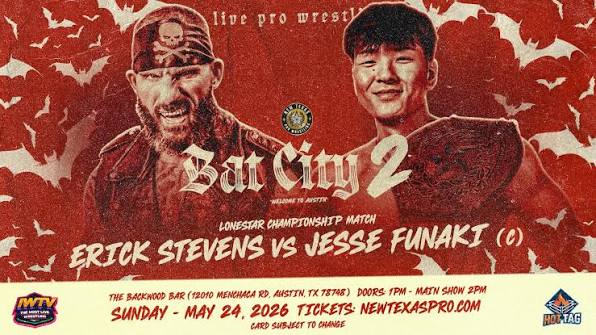
Jesse Funaki won the New Texas Pro LoneStar Championship after navigating the TX8 tournament against LVJ, Tim Bosby, and Timur The Great. Indeed, his pair of matches with Timur the Great at The Audacity of Hope and TX8 2026 were great displays of Funaki’s likability and Timur’s appeal as a monstrous villain. Though Funaki missed WrestleMania Week 2026, he made his second work trip outside of Texas this year to wrestle at New Texas Pro’s partner in the New Initiative, West Coast Pro.
Funaki’s first defense of his LoneStar title was against the resilient Erick Stevens, who recently retired for the fourth time. I remember his rad match against Takeshi Morishima for the ROH World Championship back in 2007, but I missed his highlight matches from his 2019 to 2020 comeback (like the matches in Beyond against…David Starr and Chris Dickinson; yikes) and his 2022 comeback (like matches in Black Label Pro against Kevin Blackwood, Bryan Keith, and Joshua Bishop). However, I tuned in for his enjoyable run in Deadlock Pro because Deadlock Pro was appointment viewing. This match against Funaki was Stevens’s last match for now, and he went out with a solid showing.
Since Stevens was arguably the wrestler with the highest profile to have ever challenged for the New Texas Pro LoneStar Championship, this was a big match for Funaki and New Texas Pro. (According to Cagematch, the other challenger or champion who had wrestled for a nationally televised wrestling company would be KJ Orso fka Fuego del Sol, who challenged Max Heights in 2021.)
Funaki and Stevens started with some better than average grappling, and Funaki showed his own resilience with his tribute to Austin Aries.
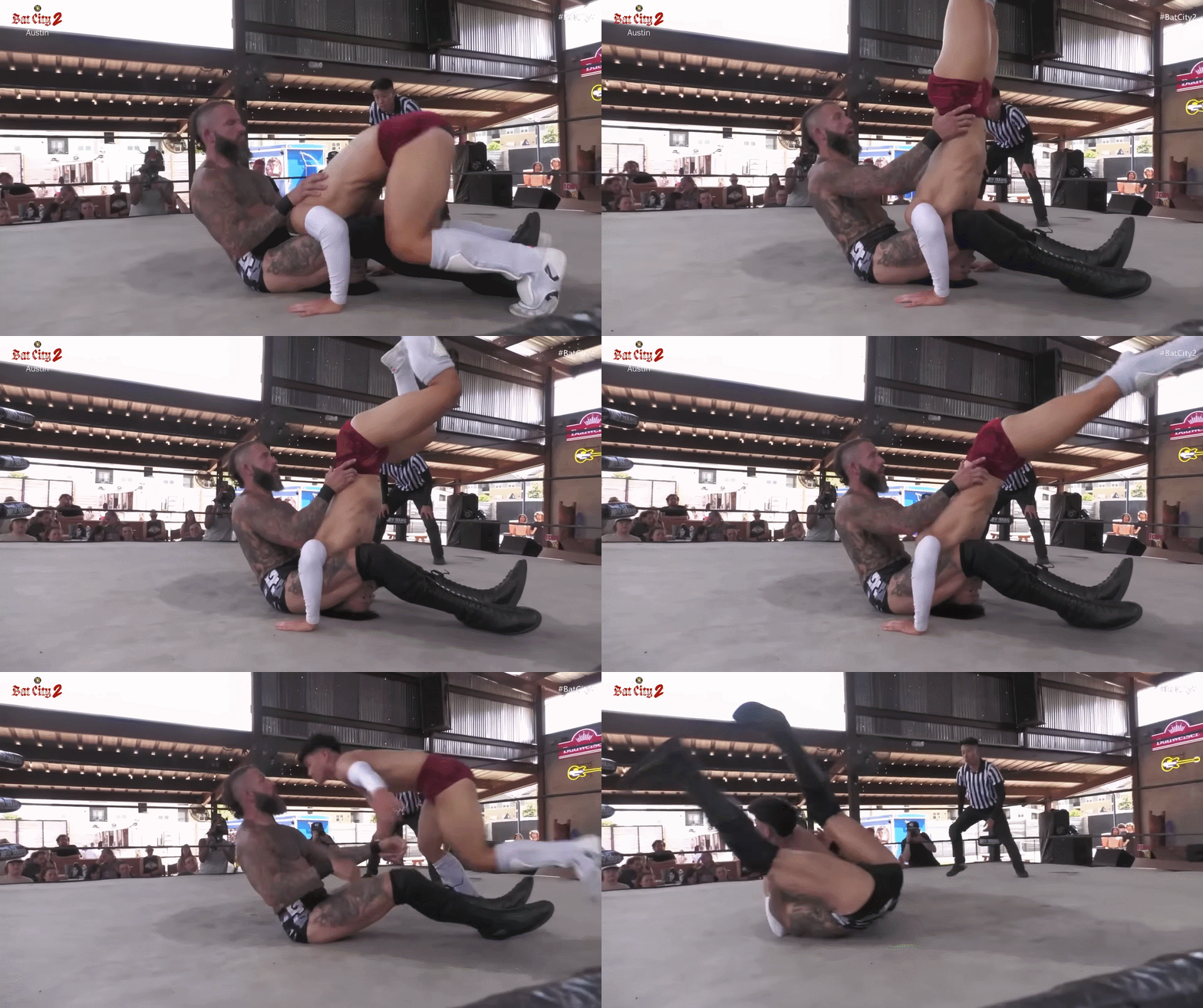
Funaki was the plucky and fiery young champion who conquered the TX8 gauntlet and Timur the Great to win the title, so Stevens went the easy route and positioned himself as the villain for the match. He cheaply attacked Funaki after rope breaks, taunted him, and slowed himself down to tour the ring after chopping Funaki down. Funaki befuddled Stevens and the crowd with his too subtle attempt to intentionally miss on a dive to the outside, but Stevens wiped that away with his crisp tope suicida.
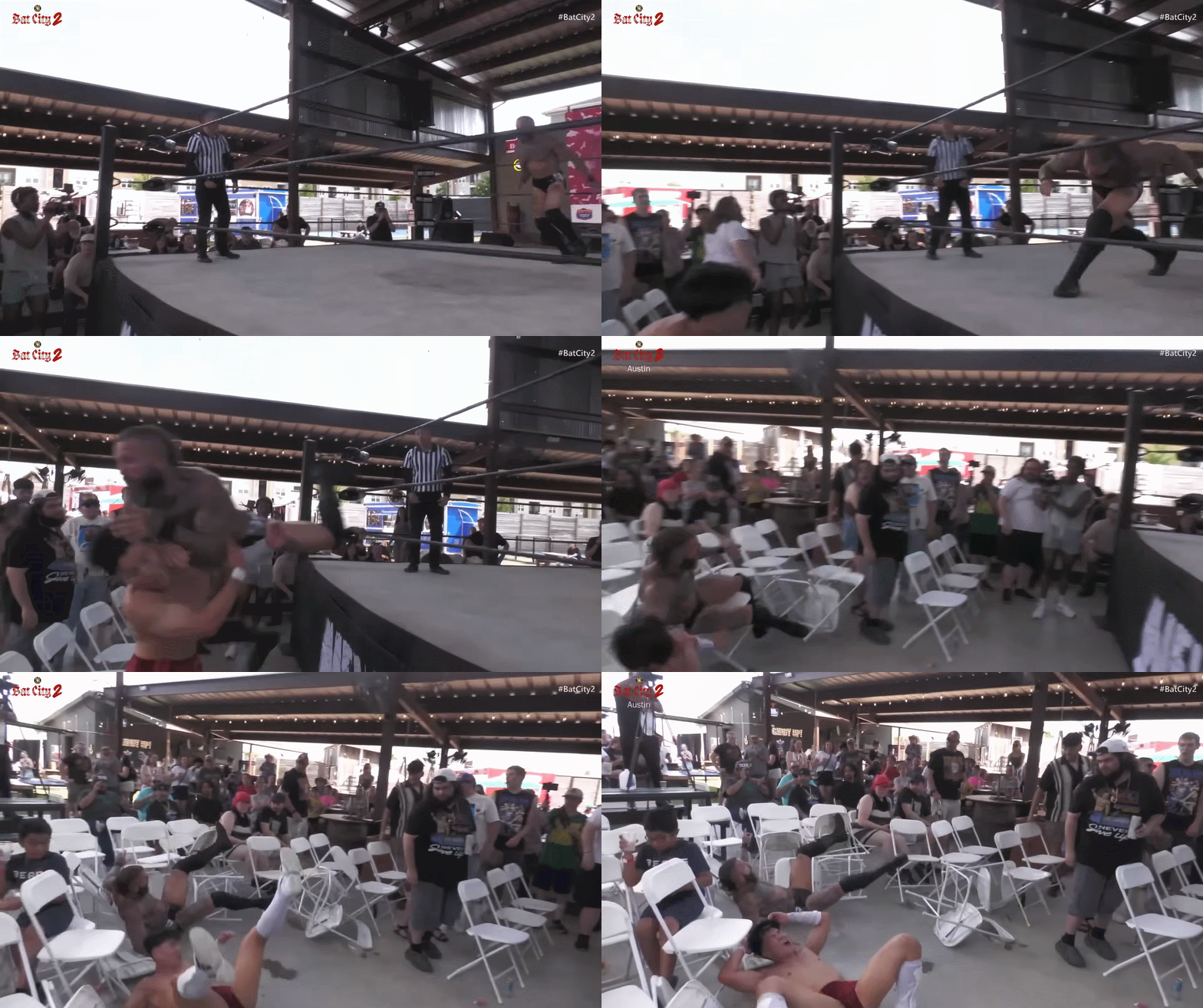
Stevens deserved credit for his great aim because his dive left the bespectacled child in the second row unscathed; the kid didn’t even drop their drink. However, the kid’s parent or guardian pulled them out of the seat immediately after Stevens landed, and I didn’t see them again during this match.
Now in control, Stevens battered Funaki and threw from one corner to another with suplexes. On the mat, I appreciated that Stevens went with the classics and clawed at Funaki’s mouth and nose. Stevens passed control to Funaki after Funaki backed Stevens off with chops, a Sling Blade, and his pretty as usual dropkick.
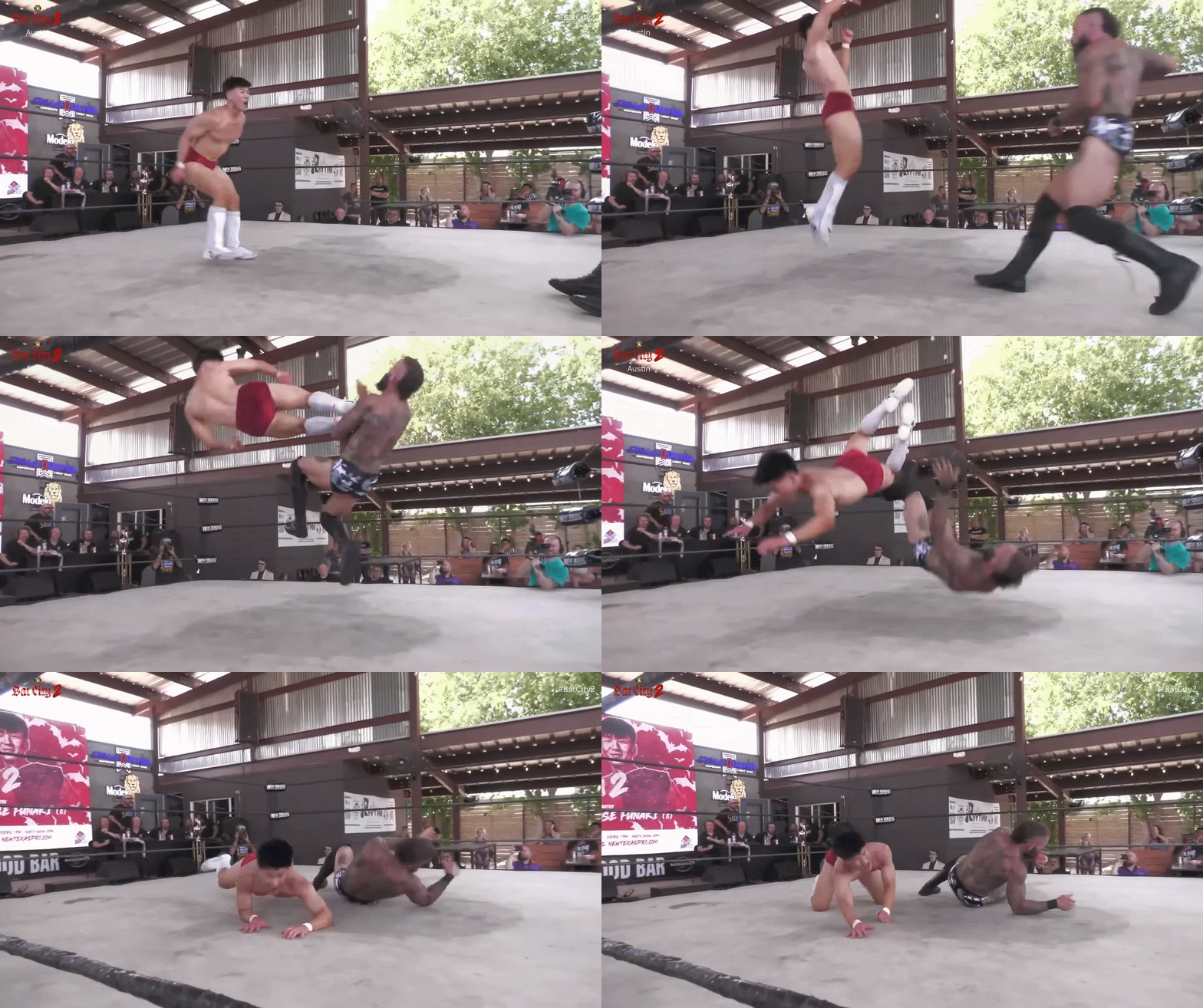
Then, he capped off his offensive burst with a flip dive over the top rope and an unusual Tornado DDT; you don’t normally see wrestlers jump off of the turnbuckle and then plant their feet for the DDT.
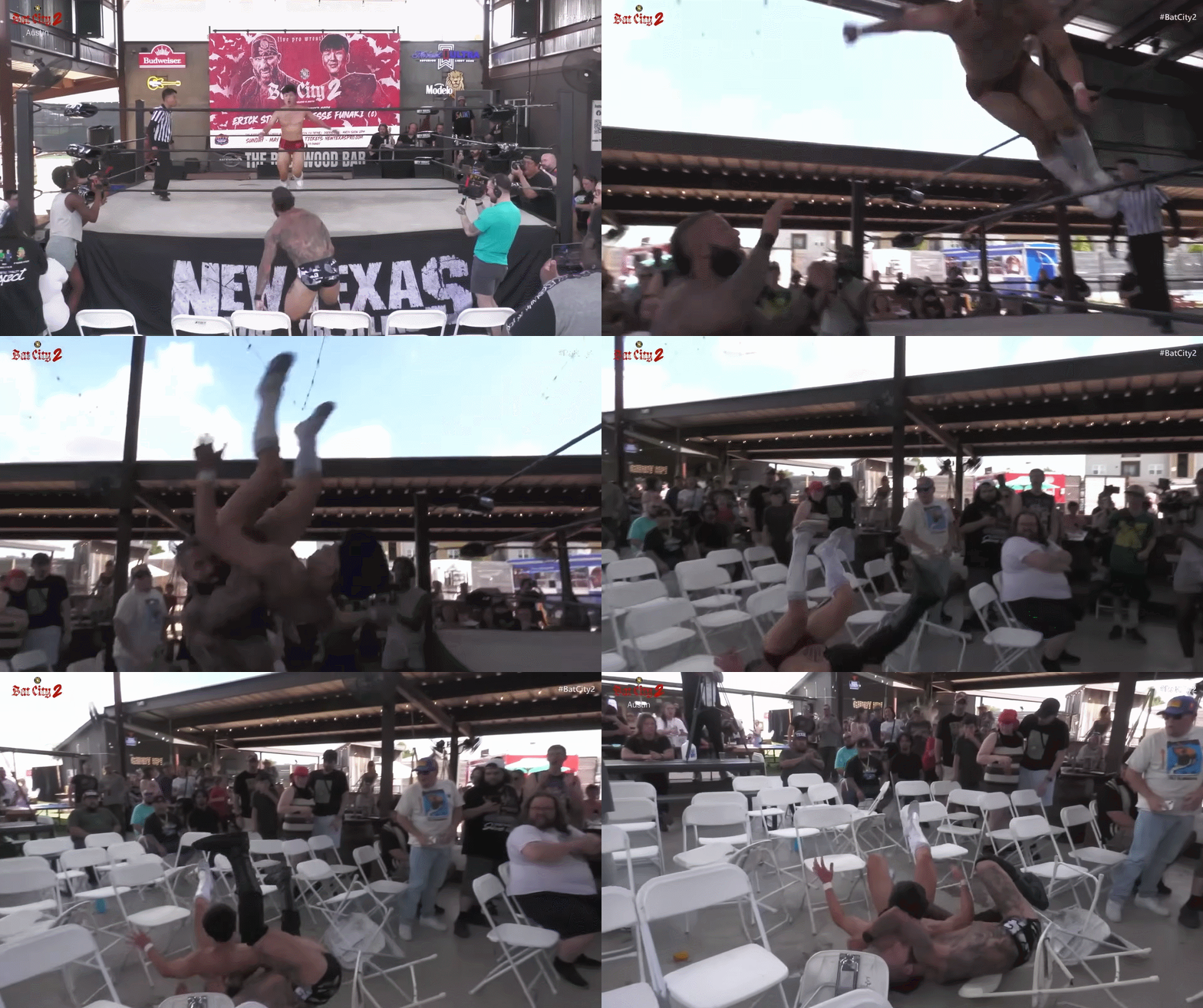
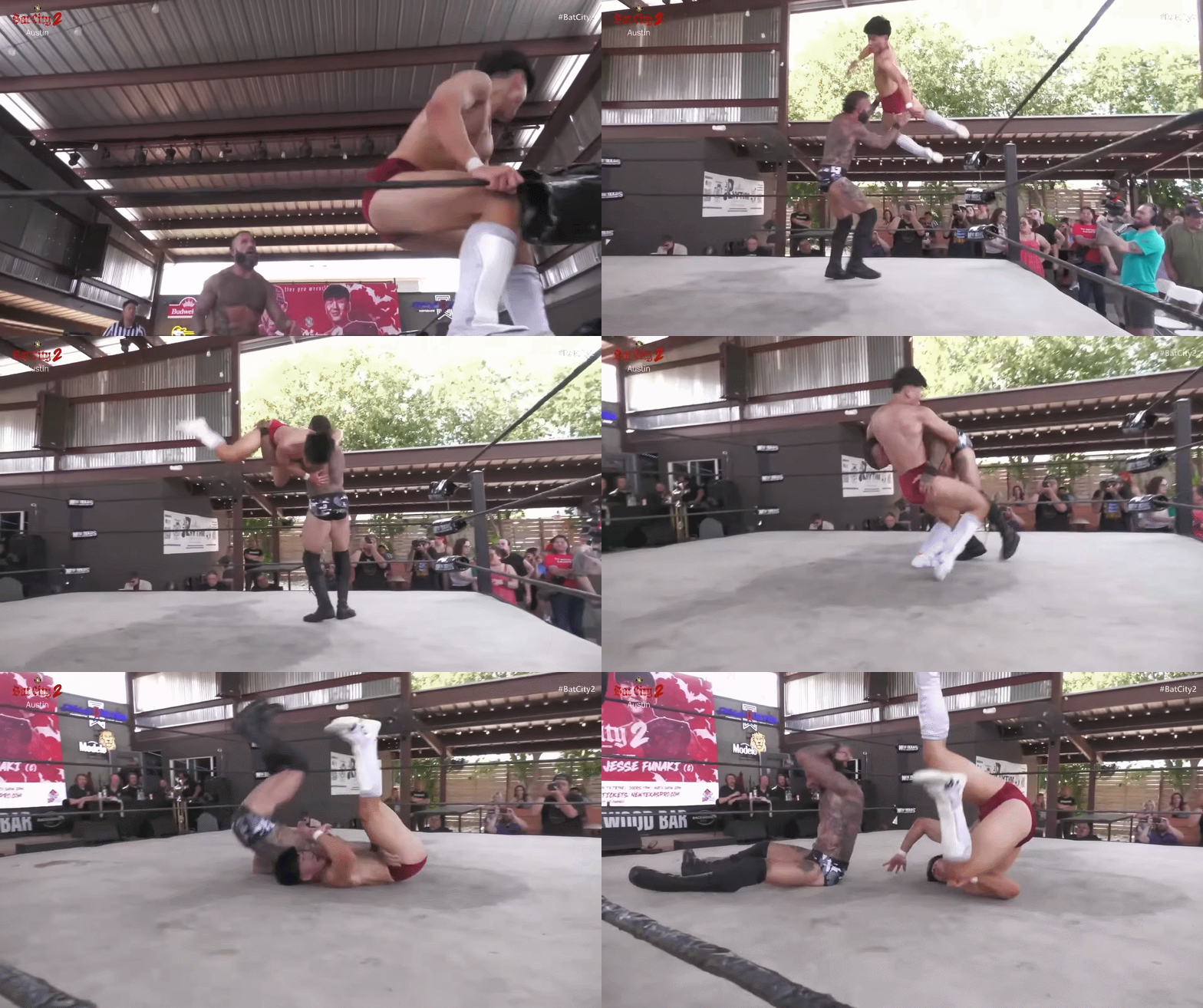
The crowd, possibly stifled by the Texas heat on a warm May day (a high of 89 degrees, according to Accuweather’s archive), was almost silent for Stevens’s comeback (another suplex, some running forearm strikes, and an Air Raid Crash). The fans were a little louder for Funaki’s own comeback (chants for Funaki sounded like they mostly came from kids, and the one fan who chanted sounded like an adult man). Here, I took issue with Funaki’s running one-footed dropkick to Stevens in the corner because it then forced Stevens to walk over Funaki’s body to set up Funaki’s bulldog. It was awkward to watch, as was Funaki’s superkick a couple of beats later.
Stevens tried to finish the match with his best combo: a rope-assisted curb stomp, a running discus forearm strike, and a Tiger Bomb. Again, the crowd was slow to respond to Stevens even though he pounded the canvas a few times. However, they were more supportive of their local favorite, especially when he rose to Stevens’s challenge to hit him as hard as he could. After bashing each other for a bit, Stevens tried to land a knockout blow, but Funaki ducked it, crashed into Stevens with a Busaiku Knee, and pinned Stevens with a Styles Clash.
This was a solid showing by Funaki, who started wrestling in 2024. He showed that he still had a solid connection with the New Texas Pro crowd, and his match felt dynamic. His fundamentals felt mostly solid, though there were some hiccups like the setup for his running bulldog and his sloppy superkick. Stevens came across well as the bullying veteran, and he stepped firmly into the villain zone without becoming cartoonishly villainous. I was entertained, though I’m glad I didn’t have to sit through the Austin heat with no shade for this match.
You can watch the match and the show on New Texas Pro Wrestling’s YouTube page.
Sinner and Saint (Judas Icarus & Travis Williams) vs. The Rogues (Casey Ferreira & Elliot Tyler)
365 Pro Wrestling
May 8, 2026
Cagematch ranking as of 7/1/26: N/A
Cagematch rating as of 7/1/26: N/A
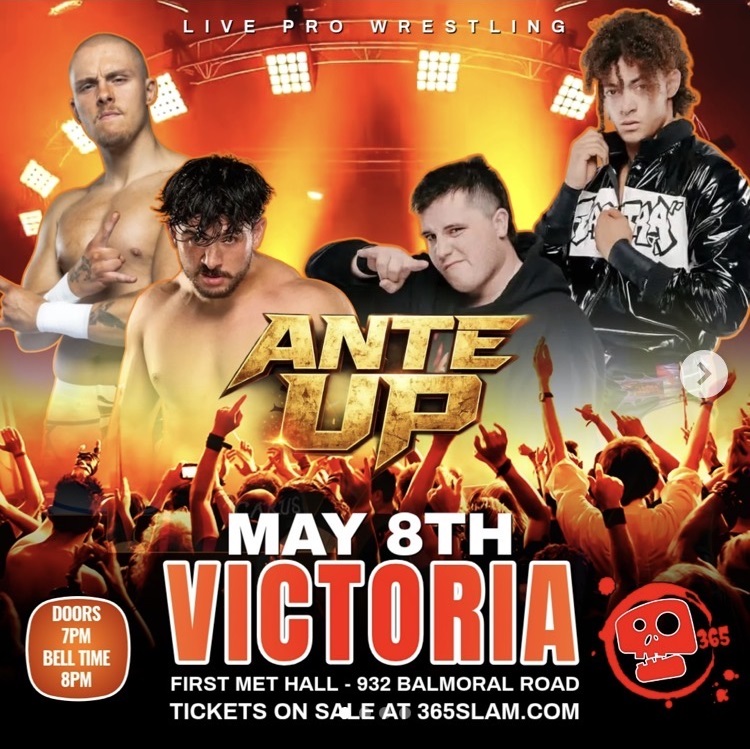
I didn’t celebrate when I saw that TNA had released Judas Icarus and Travis Williams, but I didn’t mourn their departure either. They caught my eye during WrestleMania Week 2024, and I tried to keep up to date with their work, like their very entertaining match against MAO and Mike Bailey. Clearly, TNA had fundamentally misunderstood what Sinner and Saint’s strengths were. Between 2024 and and 2026, Sinner and Saint wrestled 26 matches in TNA, and only 4 matches lasted more than 10 minutes. During their tenure, 8 of the 26 matches were on Xplosion. Their matches against intriguing opponents like Aztec Warriors (Laredo and Octagon Jr.) and The Rascalz (Trey Miguel and Zachary Wentz) lasted less than 6 minutes. TNA squandered a resource, and while I’m glad that Icarus and Williams were paid and were on national television, it still felt like TNA had wasted everyone’s time.
After their last match in TNA in March, Icarus and Williams teamed with their usual third man Evan Rivers to face Ben-K, Ho Ho Lun, and Kzy at DEFY Wrestling’s pre-WrestleMania Week 2026 crossover show with Dragongate. I had noted that Icarus and Williams were noticeably absent from WrestleMania Week 2026. DEFY had paired Sinner and Saint with Dragongate wrestlers during WrestleMania Week 2025 to impressive results, and I had really hoped at the time that Dragongate would make an exception to their stance against importing wrestlers for Sinner and Saint. Instead, they brought Marcus Mathers over, and he was fine.
Icarus and Williams had their most recent match as Sinner and Saint in June at a benefit show for the Tunnels to Towers Foundation, and I hope that it wasn’t their last match. They’ve wrestled separately since that match, but they haven’t teamed for any others so far. I had wanted to catch up with Sinner and Saint, and the fact that they faced Casey Ferreira, who really impressed me against Jonny DeLuca, caught my attention. (I’m glad that Maple Leaf Pro recognized Jonny DeLuca’s talents, even if I fear that they’re squandering his potential.) So, it was time to go back to 365 Pro Wrestling, which I had last visited during Daniel Makabe’s retirement tour. Coincidentally, Makabe faced Icarus in that match.
It almost sounded like Sinner and Saint entered to Sarah McLachlan’s “Sweet Surrender.” I contend that it would make a good wrestling entrance theme, even if it might not seem like a conventional choice. Imagine Bryan Danielson entering to “Sweet Surrender” and forcing his opponent to submit to a simple submission hold.
Icarus and Williams wore the shirt that TNA had produced for them, which was no longer available on TNA’s merchandise page. Though he had wrestled for 10 years, Elliot Tyler was new to me. Beyond the physical similarity, he projected an attitude similar to Kevin Steen’s. He had some fun with telling the referee to make Travis Williams back off so that he could take the “jacket off.” He and Williams had their own tribute to Austin Aries when Williams trapped Tyler’s head with his legs.
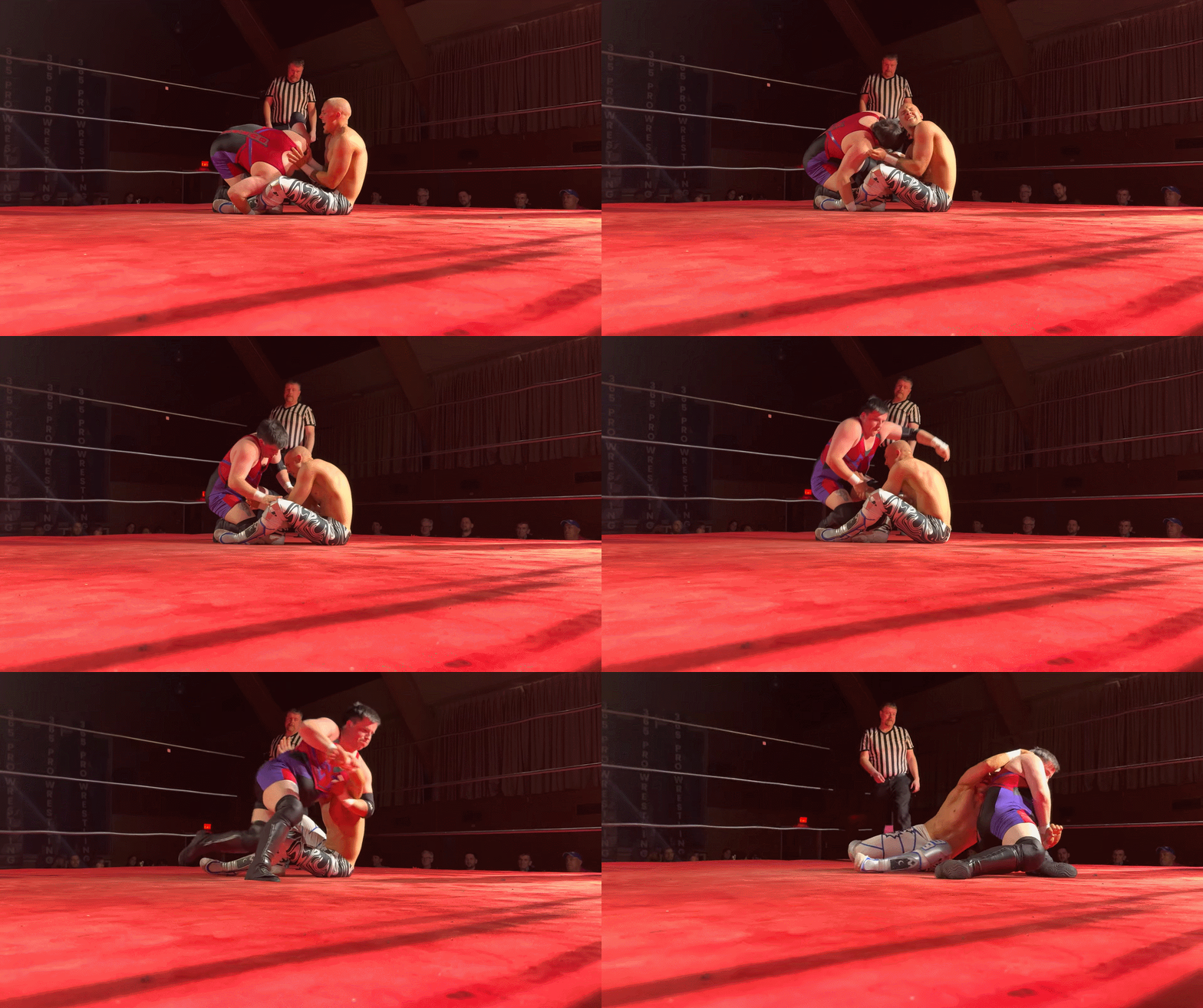
While Travis Williams had entertained me before, I was most excited to see the combination of Casey Ferreira’s athleticism and Judas Icarus’s wiliness. For example, just when I had thought that Icarus’s shoulder block seemed weak, he showed that it was weak for a reason. He used it as a setup for a wilder shoulder block to knock Ferreira down.
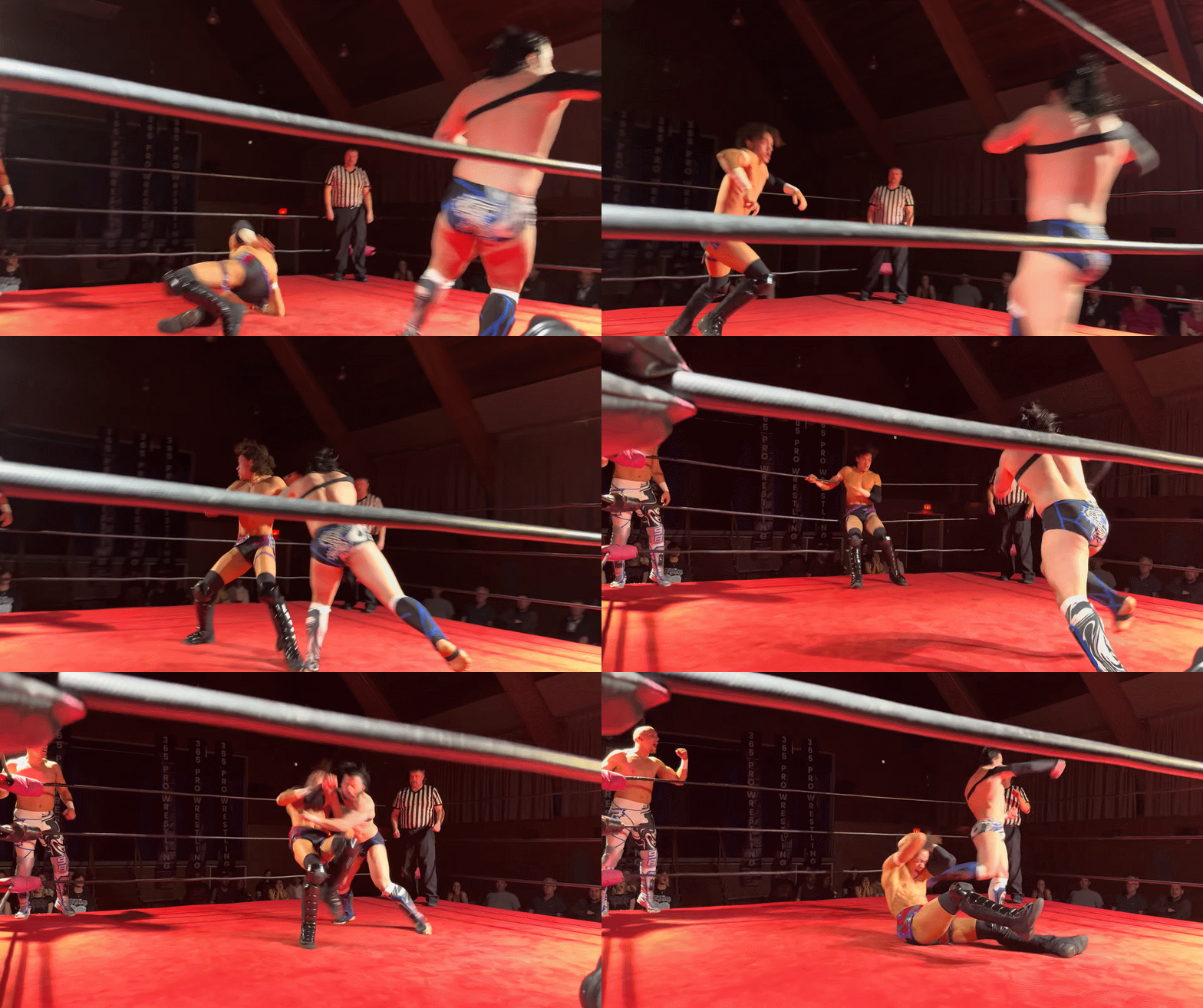
A large part of Williams and Icarus’s appeal as Sinner and Saint came from how seamless their coordination seemed. They demonstrated their connection during this match as well against Tyler, who tried to throw Williams and Icarus into each other in their corner and ultimately suffered a kick to the head from both men. Another large part of their appeal came from the unique ways that they would use their body. Williams blocked the top turnbuckle with his body to protect Icarus from the impact. Later, he twisted around to escape Ferreira’s grip and suplex him.
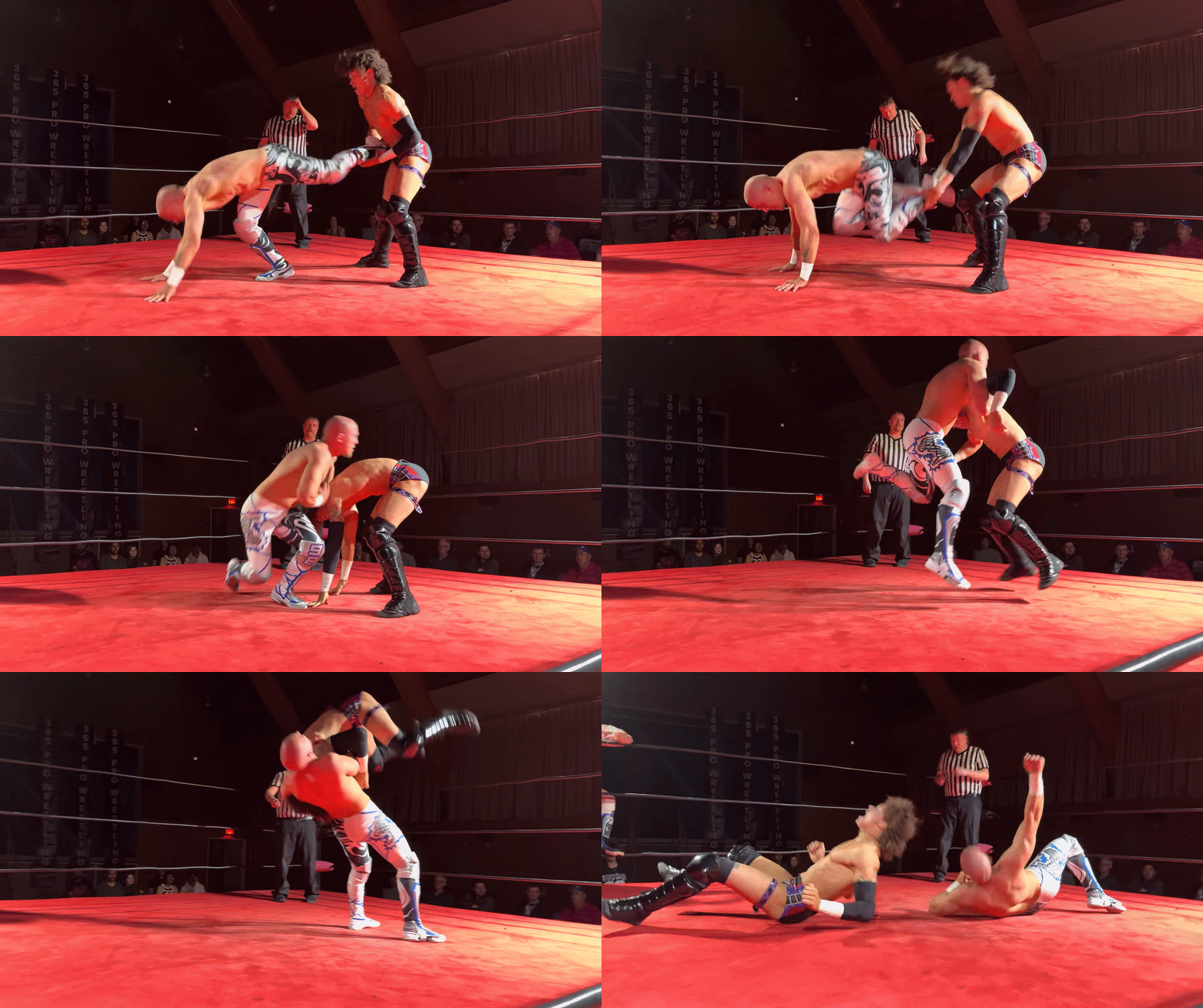
The crowd gave the match some undeserved “This is awesome” chants as Ferreira took control of Icarus. Ferreira wasn’t quite as explosive or dynamic as I had hoped, and Icarus seemed to be slowed by his larger size. Only Williams moved at the speed that I had expected of Sinner and Saint. So, it was good to see Icarus seem to turn it up a notch when he and Williams double teamed Ferreira.
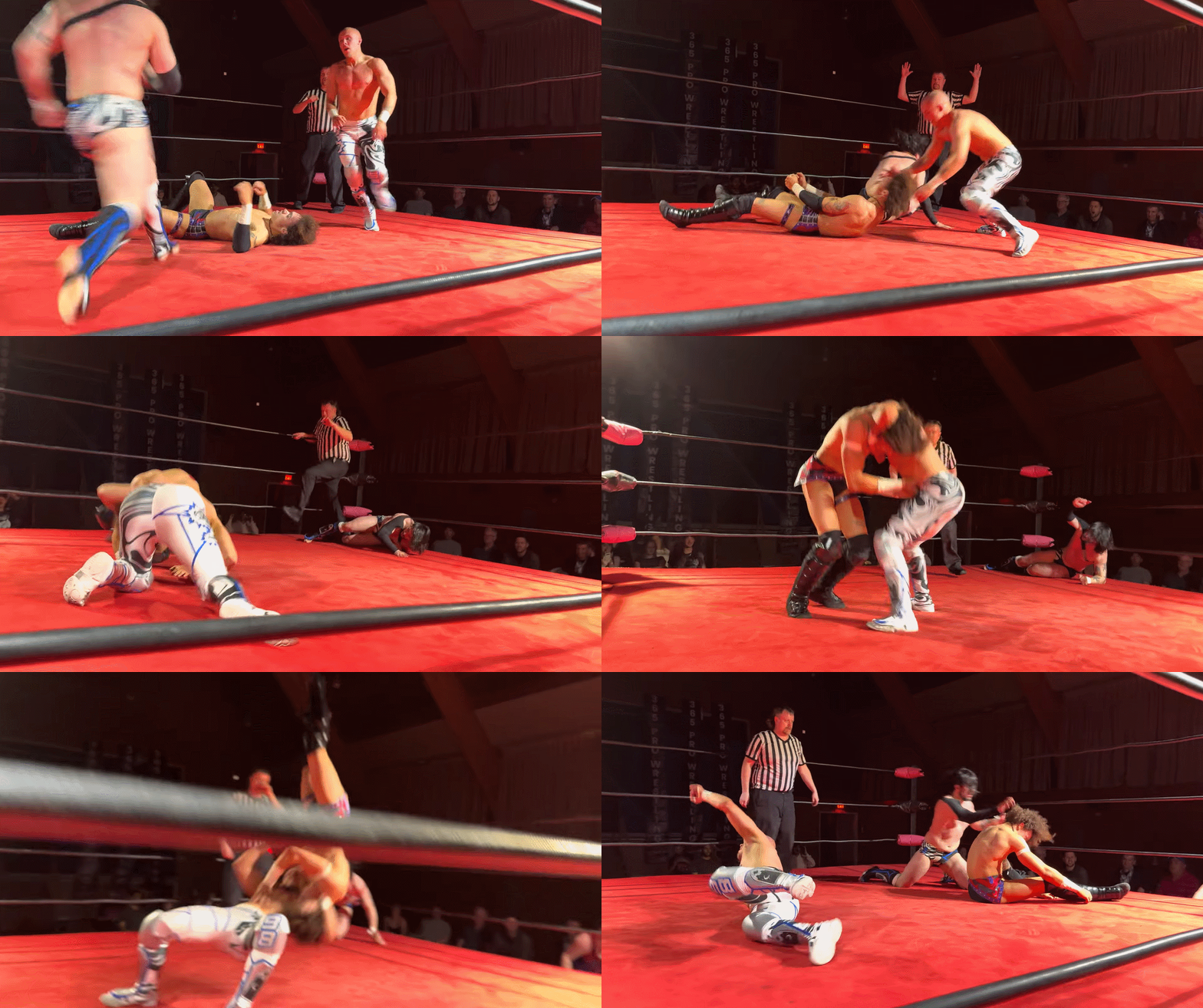
Near the end, we got more of the Sinner and Saint and Casey Ferreira that I had hoped for upon starting this match. Williams quickly switched directions in the middle of the ring to try to take Ferreira out, but Ferreira dodged him and landed a moonsault from the middle rope to Williams in the crowd. Later, Williams again protected Icarus from the full brunt of Tyler’s Stunner and threw him back at Tyler. Using each other as weapons against their opponents was a calling card of Sinner and Saint, so I pleased to see them in action. Williams and Icarus then finished Ferreira with a combination dropkick and Angel’s Wings.
The match didn’t quite have what I was hoping for from Icarus and Ferreira, but Williams impressed with his motor throughout the match. Tyler had a good personality for 365’s First Met Hall in Victoria, British Columbia, and I would be curious if it could fit in a larger space with a larger crowd. As of this writing, Ferreira seemed to be in the middle of his tour with Kyushu Pro, so I hope that he had a showcase there. Sinner and Saint appeared at a recent Maple Leaf Pro taping, so they’ve found a landing spot, even if it wasn’t the company that I had hoped.
You can watch the match on 365 Pro Wrestling’s YouTube page.
Dan Archer vs. Randy Chambers
SLAM #24
June 13, 2026
Cagematch ranking as of 7/1/26: N/A
Cagematch rating as of 7/1/26: N/A
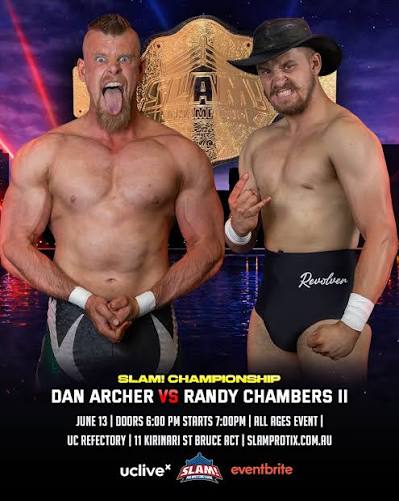
Archer vs. Chambers I was delightful in its simplicity, and I pointed to it as evidence for my inclusion of Chambers on my 30 Under 30 ballot this year. However, the match’s aftermath greatly annoyed me because it undermined Chambers’s triumph over Archer for the sake of a potentially bigger climax in a rematch. It was particularly irksome because the idea seemed so contrived; Archer attacked the referee during the match and then demanded the SLAM board of directors to overturn Chambers’s victory. Chambers’s win was overturned, which led to this rematch for the vacated SLAM! title. Still, I had high hopes for this rematch based on what they achieved in the first match.
There seemed to be a good mix of adults and children at the UC Refectory in Belconnen this evening, and they all booed Archer lustily. Archer wore a quiver full of arrows in his entrance to really hammer home what his name is; imagine if Princeton Pike had to carry a pike to the ring for every match. By this principle, Chambers should have had to drag a cart full of violins, violas, cellos, bass cellos, flutes, oboes, clarinets, bassoons, French horns, trumpets, and a timpani. Chambers could have a harp in the cart for the special matches.
Instead of a cart full of musical instruments, Chambers had his usual poncho and outback hat, and he slapped every offered hand as he rounded ringside en route to the ring because he was a fighting, friendly babyface. Archer and Chambers struck some familiar beats before the match to really hammer home who should be booed and cheered: Archer grabbed the title belt from the referee to pose with it in the corner, and Chambers encouraged the crowd to taunt Archer with “You tapped out” chants while Archer covered his ears.
Off the bat, I appreciated Chambers’s tenacious arm wringer; rolling through with Archer on the mat to maintain the hold was a very nice touch.
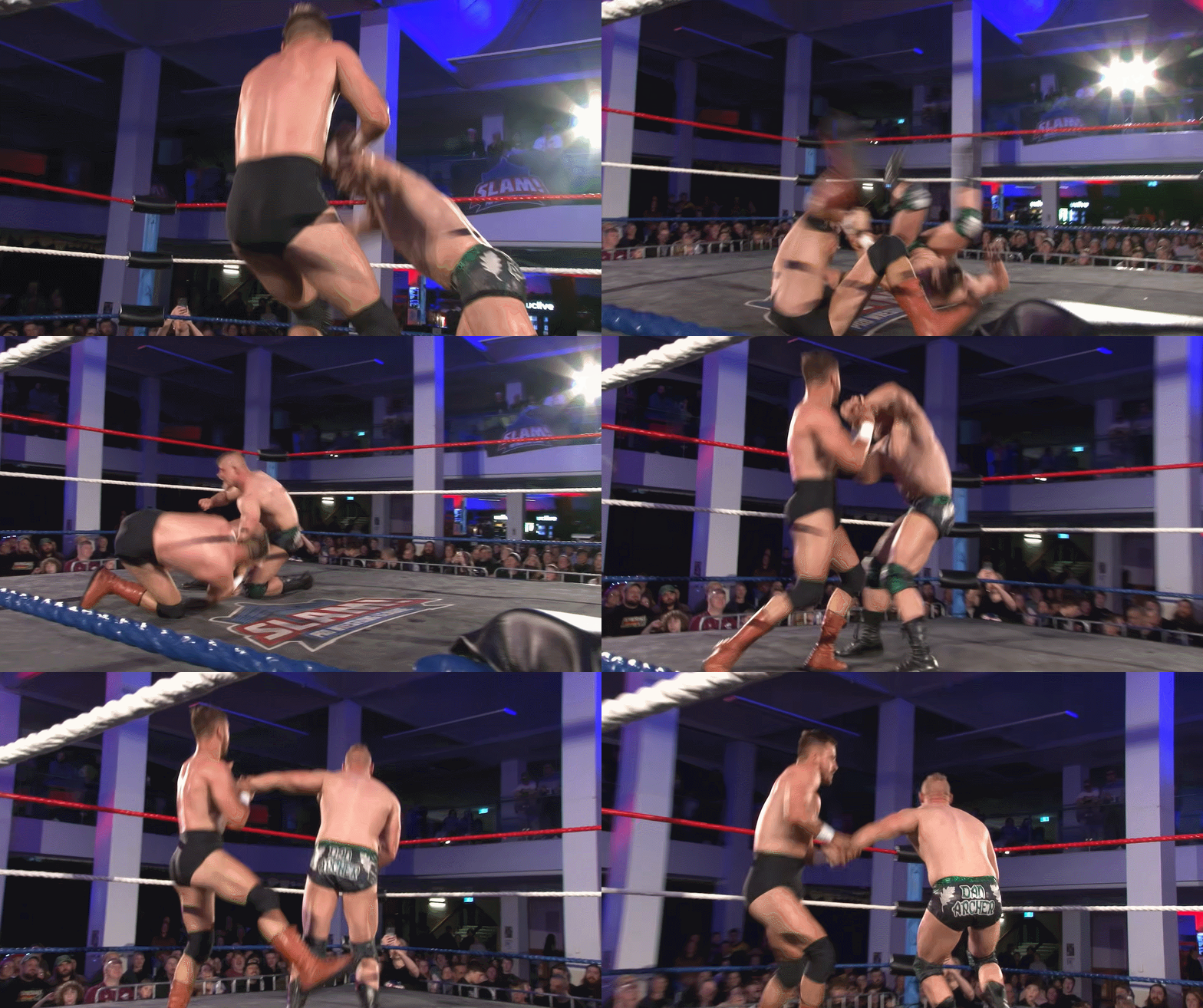
Chambers made clear that he was more technically proficient than Archer, and he chased Archer around the ring with a dropkick between the middle and bottom ropes. Archer, ever the pro, out-brawled Chambers outside the ring and found a young girl in the front row so he could punch Chambers in front of her. Excellence at the basic beats can be as exciting as innovation, and Chambers and Archer once again excelled in their execution of simple wrestling storytelling. As the commentators noted, Chambers presented himself with more confidence than in the first match, and his first highlight, a headscissors from the middle rope, again showcased his reliance on technique over raw power.
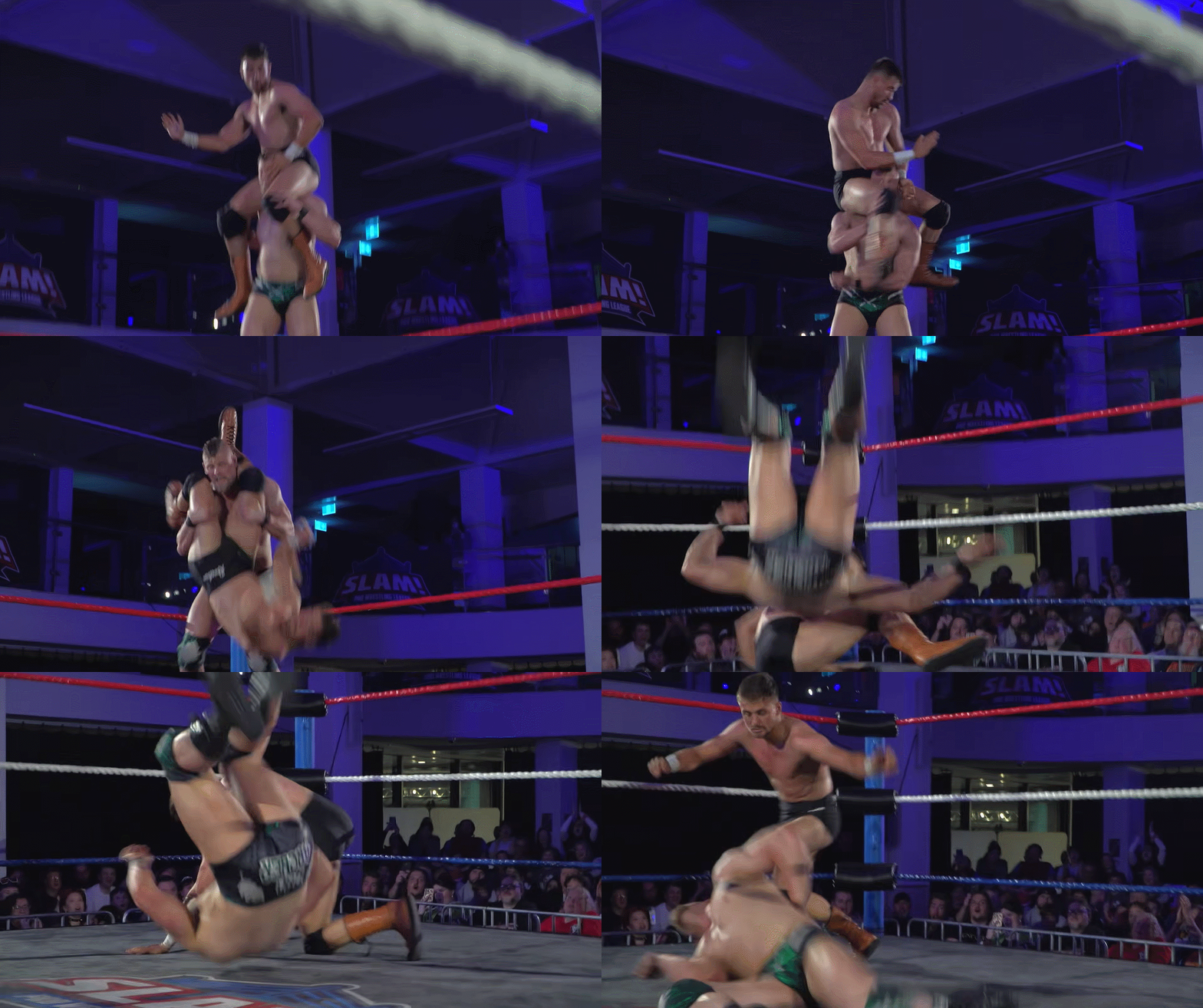
On the other hand, Archer, as the beefy villain, relied on brutish strength. Chambers might have been able to roll off of Archer’s back to re-enter the ring, but he ran into a Blue Thunder (from down under?) Bomb.
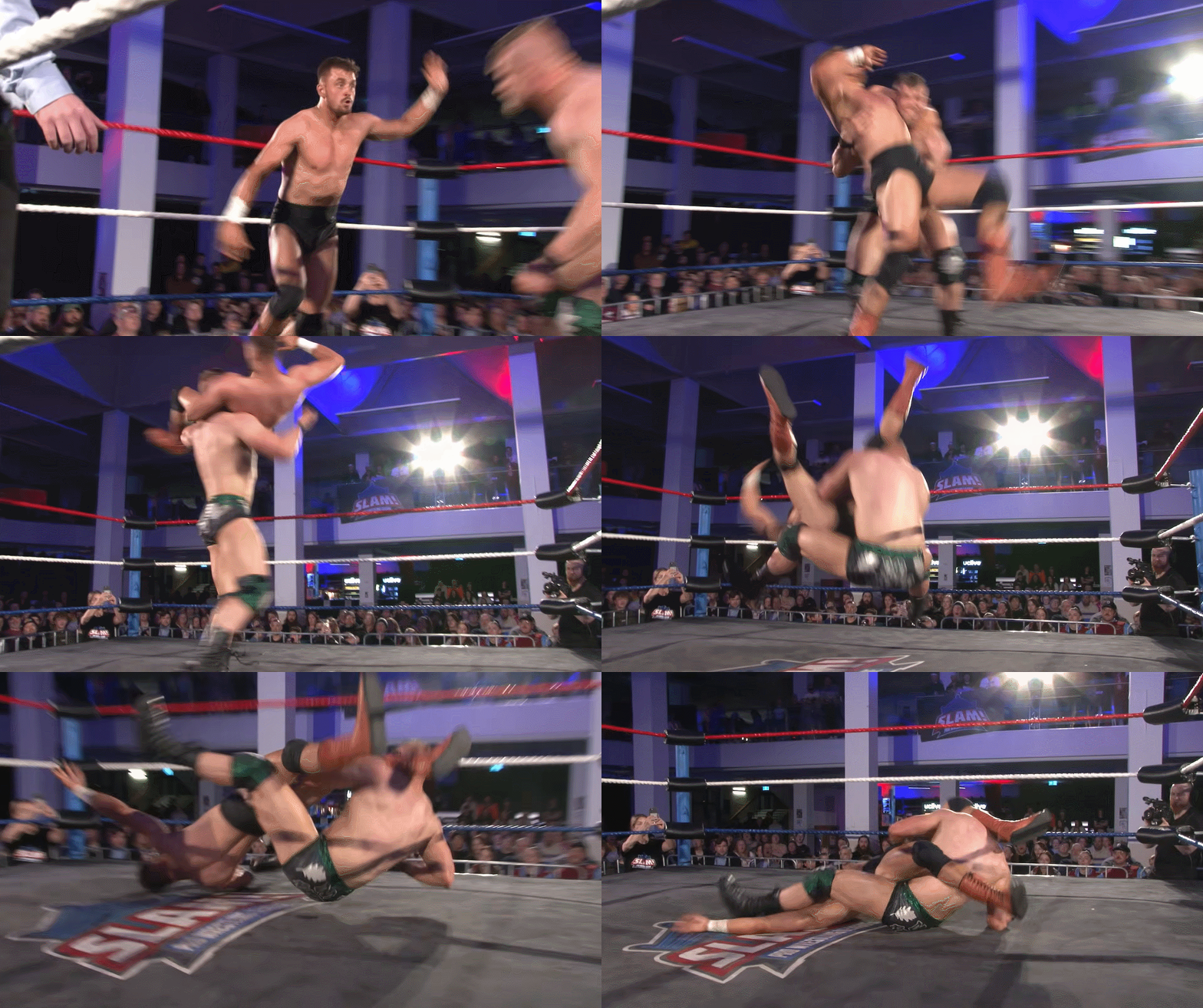
Archer and Chambers also kept a pace that ensured that the crowd wouldn’t lose interest. Just when it felt like Archer’s control section was starting to lose some steam, Chambers interrupted Archer’s run by again relying on technique and countering a powerbomb with a sunset flip. That made Archer’s deadlift powerbomb right after seem more impressive than if he just kept his offense going against Chambers.
So, it was especially annoying when Archer accosted the referee and baited Chambers into striking the referee. Two staff members dragged the incapacitated referee away while Chambers continued his offense. Archer outmaneuvered Chambers on the middle turnbuckle to powerbomb Chambers from the top rope to the floor. It made me gasp even though I had seen BJ Whitmer’s even more gnarly powerbomb to Jimmy Jacobs in ROH. Theoretically, the two staff members and the referee should have helped ease the fall for Chambers. In practice, I don’t think they did much of anything because they were out of position. In fact, they’re lucky that Chambers didn’t take out their legs on his descent. If either commentator had yelled “DANGEROUS~!” after the powerbomb, it would have completed the circle.
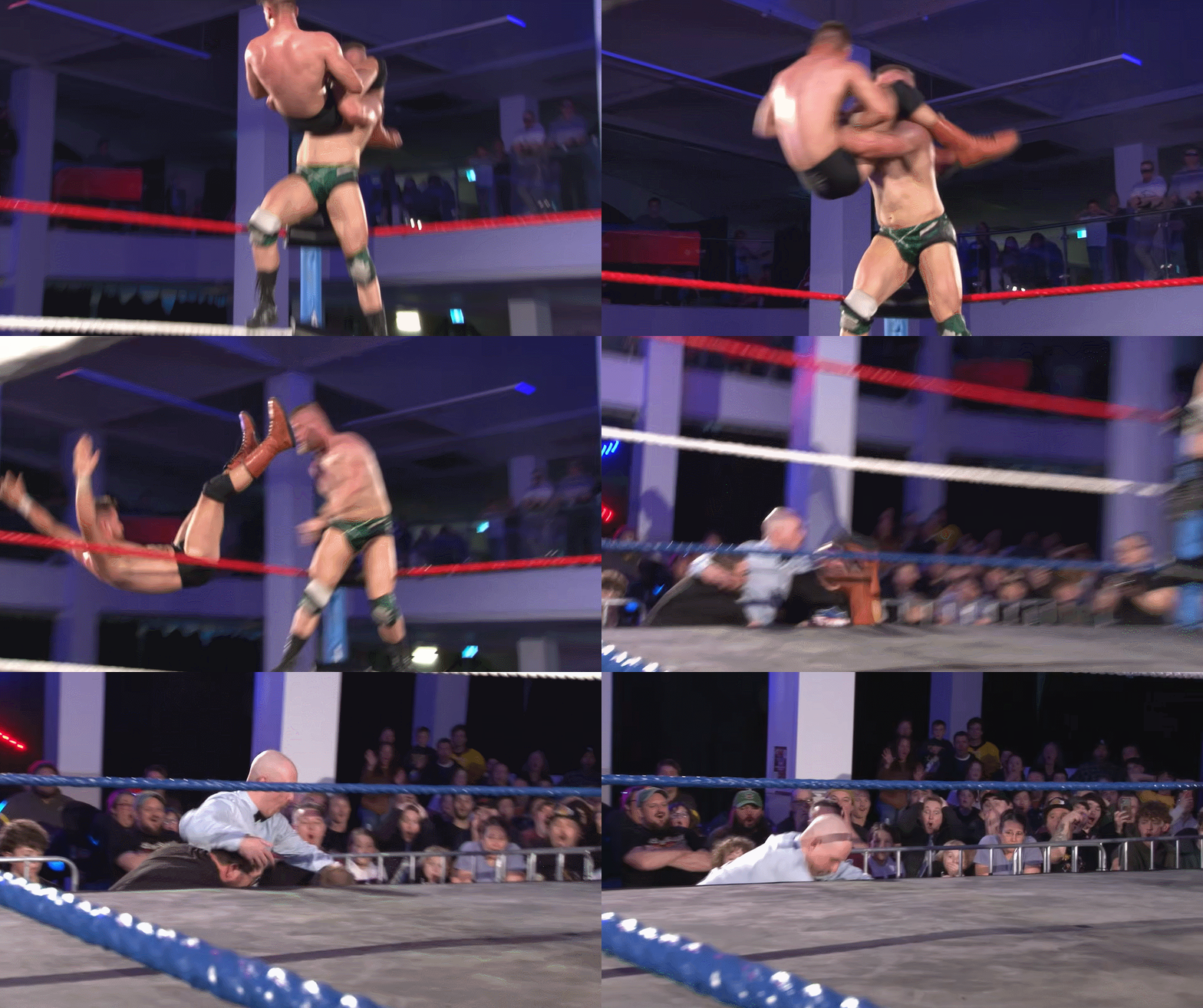
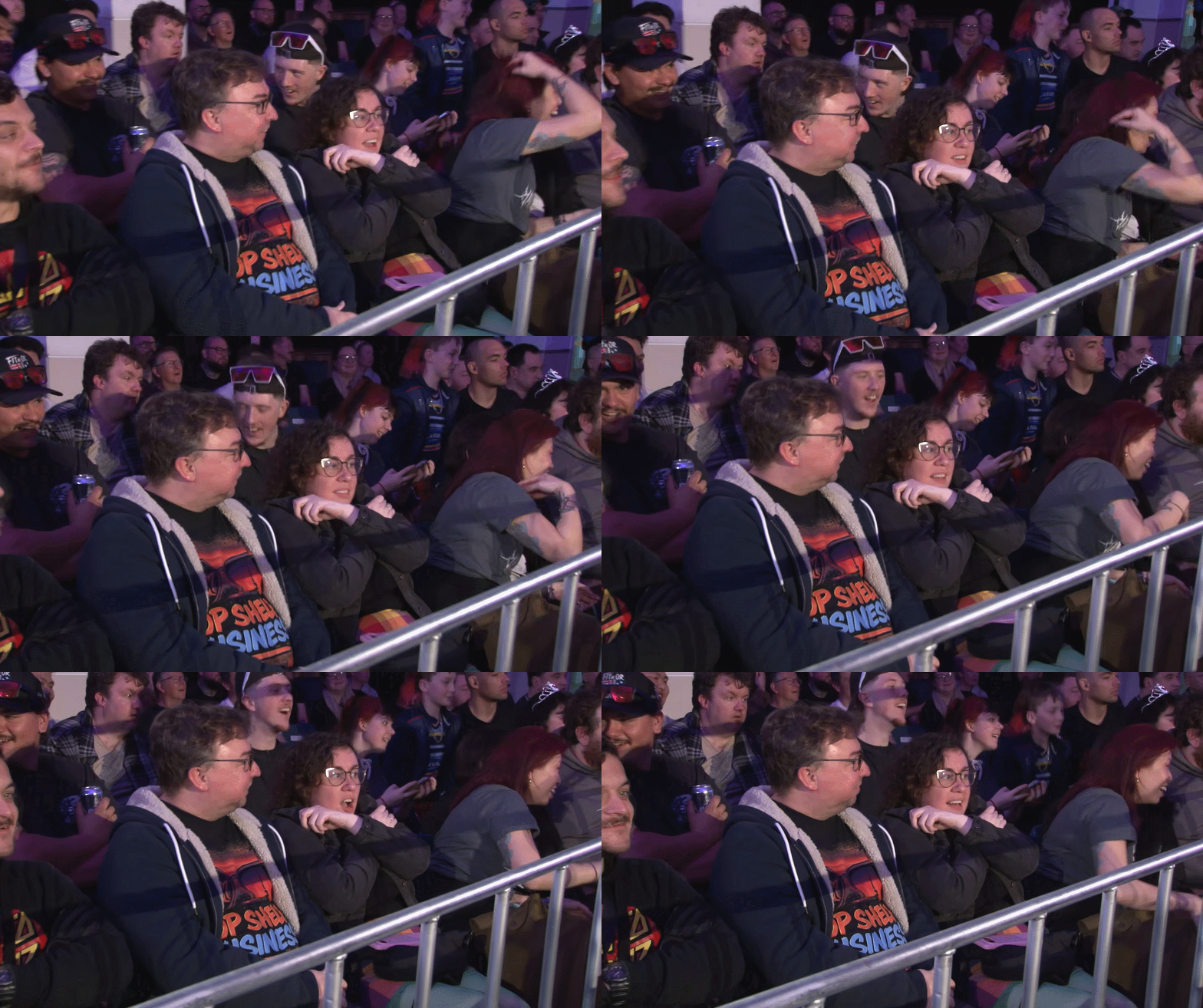
The fans were understandably shaken by Archer’s attack.
Archer dragged Chambers back into the ring, but there was still the issue of the missing referee. They let the drama play out some more after Archer missed his swanton and Chambers, to my disappointment, showed no ill effect from splattering on to the floor from a great height. Instead, Chambers hit a Buckshot Lariat on Archer and got the visual pin, which would probably set up a rematch with Archer. A replacement referee oversaw Chambers’s STF on Archer and watched Chambers and Archer slug it out before Chambers ran the ropes to charge up his lariat. To my surprise, Chambers switched from a pin to an armbar with quickness. To my further surprise, Chambers survived two more powerbombs from Archer.
Nearing the conclusion, Chambers got a nearfall with a German Suplex hold after landing on his feet from Archer’s release German Suplex. Archer’s package piledriver also only got a nearfall. Chambers combo’ed a lariat that sent Archer outside the ring, a tope suicida that chased him, and a crossbody splash for another nearfall. With momentum on his side, Chambers escaped Archer’s killer spinning German Suplex from the first match and planted Archer with a Spanish Fly. Unable to secure the victory, Chambers prepared for another crossbody splash, but Archer kicked the referee’s knee to knock him away, hit Chambers with a lowblow, and then spiked Chambers with a piledriver from the middle rope. That villainy paid off, and Archer won the rematch and the title.
Chambers and Archer went for the epic and fired their biggest munitions without almost no regard for their match’s story. Thus, the change in tone lost some of the spark that made the first match so entertaining. In particular, Chambers really showed his deficiency in portraying damage and pain. He seemed completely unfazed by his fall to the floor. Archer amped up his villainy play-acting; I’ll probably think more of him than Chambers after the match. After all, there was always room in wrestling for a beefy guy who would throw his opponents around. Clearly, this will become a trilogy where Chambers likely will triumph despite Archer’s chicanery. However, I think the first match was the smoother experience because they didn’t aim quite as high.
You can watch the match and the show on SLAM! Pro Wrestling League’s YouTube page.
Tarlee (c) vs. Aysha
ROW We Are Renegades 2026
April 4, 2026
Cagematch ranking as of 6/1/26: N/A
Cagematch rating as of 6/1/26: N/A
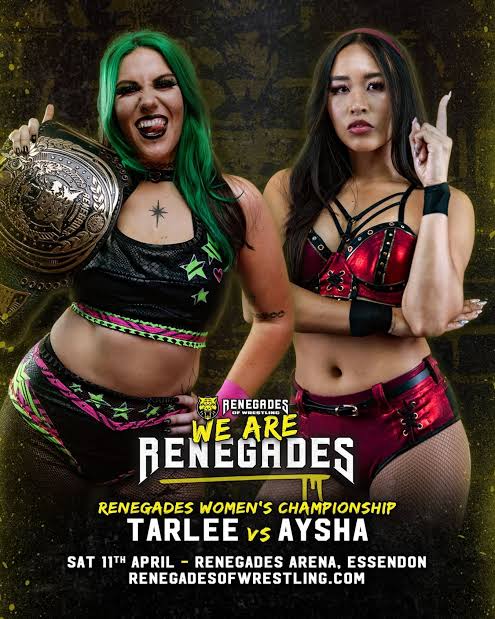
For the first time, I received a match recommendation from a reader. After I covered Aysha’s match against Shay Kassidy in my first scouting report for the 30 Under 30 project, a reader recommended an alternate match to evaluate Aysha’s wrestling ability. The reader recommended a match against Tarlee from Renegades of Wrestling’s God Save the Renegades from 2024. However, I wanted to see a more recent performance by Aysha. So, I opted for her rematch against Tarlee from this year.
Aysha did her best Mercedes Moné impression in the taped monologue before the match. She sounded confident, even if she lacked the gravitas that Moné summoned in her best performances. (Here, I have to express my annoyance at AEW’s YouTube page, which had surprisingly few of Moné’s monologues or dialogues with other wrestlers clipped for sharing. What is the point of having your wrestlers deliver these speeches that are meant to inspire customers to spend money on your product if you can’t enable your fans to expose them to other fans?)
On one hand, Tarlee used Avril Lavigne’s “Girlfriend” for her entrance theme, and who am I to doubt the appeal one of pop’s greatest confections of the 2000s? On the other hand, Tarlee’s entrance video advertised a hard-drinking party girl persona akin to Session Moth Martina or ODB. I became concerned about Tarlee’s performance based on that first impression.
Aysha demonstrated greater athleticism than her match against Shay Kassidy from August 2025 with a neat little flip to dodge Tarlee’s short lariat.
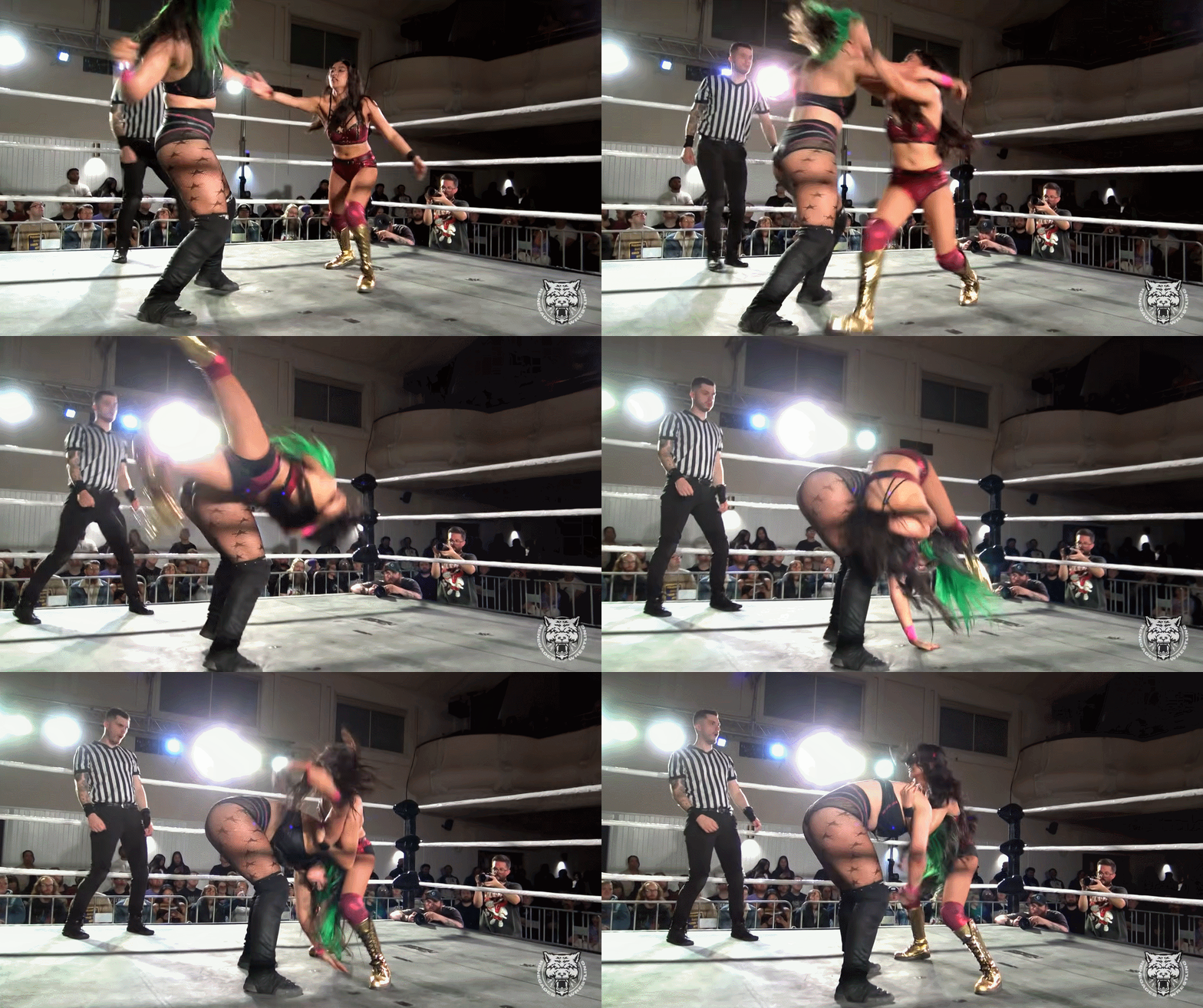
In her own tribute to Austin Aries from Tarlee’s headscissors trap, Aysha lacked quickness in her lariat attempt at a seated Tarlee. In general, Tarlee and Aysha’s segments were choppy, which betrayed a lack of confidence or experience. For example, Tarlee’s dropdown pin on Aysha after Aysha tried to roll her up with a sunset flip felt slow, and Aysha looked unsure how to get into position for her pin after Tarlee missed a dropkick. While Tarlee pulled off a fancy pin, it irked me that she gave up on it on the two-count and didn’t wait for Aysha to kick out of it. (I acknowledge that the pin may have had to concede to reality, since Tarlee outweighed by 44 pounds. I’d counter that they should have chosen a different pin.)
I can understand Aysha’s and Tarlee’s appeal and their potential. They’re both under 30 years of age, and they could build on their strengths. Aysha had the mean, entitled former champion persona down, though I think she could have interacted with the crowd more. She snapped back at a fan’s comment once during the match, but she didn’t make much of a connection with the otherwise. As a power wrestler, Tarlee had some impressive offense, but she also failed to interact with the crowd. Moreover, there were fundamental issues, from Aysha’s and Tarlee’s unconvincing strikes to the general looseness of their movements, that underserved the match’s potential.
You can watch the match and the show on Renegades of Wrestling’s YouTube channel.
Next time: “Again I try
Just need to fly
For just one day if I could
Be that way
I dream I move
I dream I groove
Like Mike
If I could Be Like Mike
I wanna be, I wanna be
Like Mike”
– Bernie Pitzel, “Be Like Mike”
Well, what if instead of dreaming about being like Michael Jordan, we dreamt of leaping into the air like legendary Japanese volleyball player Yuki Ishikawa or NBA underdog Yuki Kawamura? In that spirit of flight, let’s zero in on past and present junior heavyweights in AJPW, NOAH, Dragongate, Osaka Pro, Michinoku Pro, and…FREEDOMS?!


