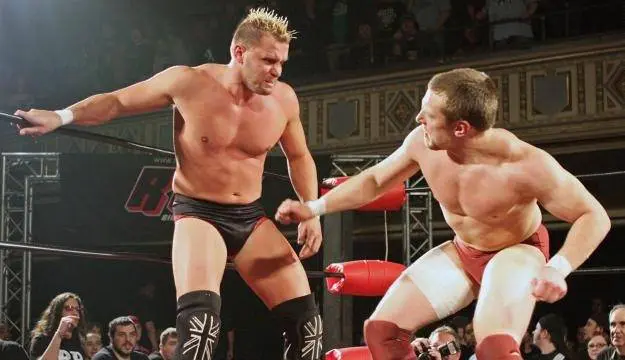
So, I thought the column would return when we focus on some of the most promising young wrestlers around the world (of which I could find footage).
Instead, there’s been so much great wrestling already in 2026 that the call to highlight what’s good was undeniable. Thus, we’ve returned in a slightly different format; whereas we dove deep into specific matches before, we’ll take a higher-level look at these matches and go over what really worked (or not) about them.
As the column dug its way out of the grave where it slumbered, it made sense to start with the grimy, the sleazy, the easily forgotten world of micro-independent wrestling companies around the world, where the wrestlers might be wrestling in a ring that was set up in a nightclub and the cameras might be placed wherever they would fit.
Takahiro Tababa (c) vs. Gajo
H-Production
January 18, 2026
Cagematch ranking as of 2/1/26: 38
From the start, you have to appreciate that Gajo and Takahiro Tababa have bodies that we don’t see in American television professional wrestling (or sports entertainment) companies or even in major puroresu companies today. They’ve also stripped away some of the artifice from the presentation: for example, we see that the ring’s “ropes” are just linked chains, not the springy cables that wrestlers are able to bounce off of elsewhere.
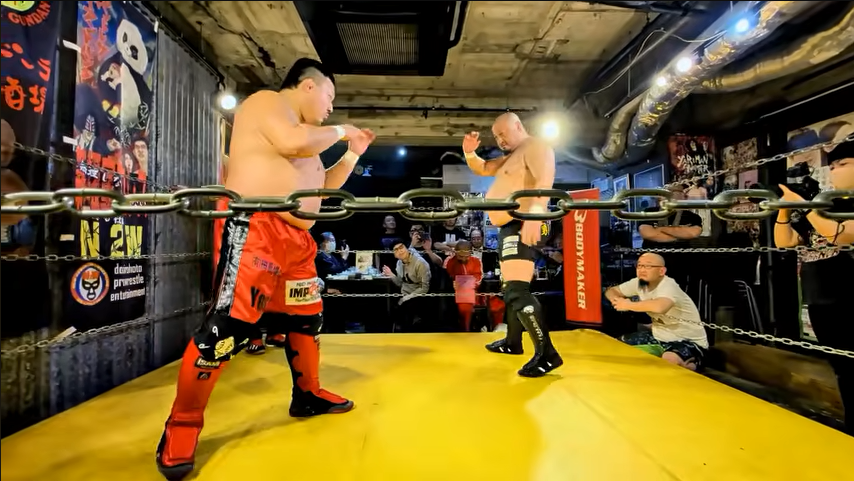
The 41-years-old Gajo challenged the 32-years-old Tababa for the International Martial Arts title this evening at the Tokyo Underground Arena, which slots firmly into the “industrial warehouse that received a euphemistic name” category of wrestling venues like New Texas Pro Wrestling’s home in Houston, the Houston Premier Arena. Per Tapology, Tababa is the #5,053 ranked MMA fighter in the Asia Pacific region and holds a 5-10-0 MMA record. At 10-12-0, his record on Sherdog isn’t any better.
Nonetheless, I appreciated the martial spirit that Gajo and Tababa brought to this match.
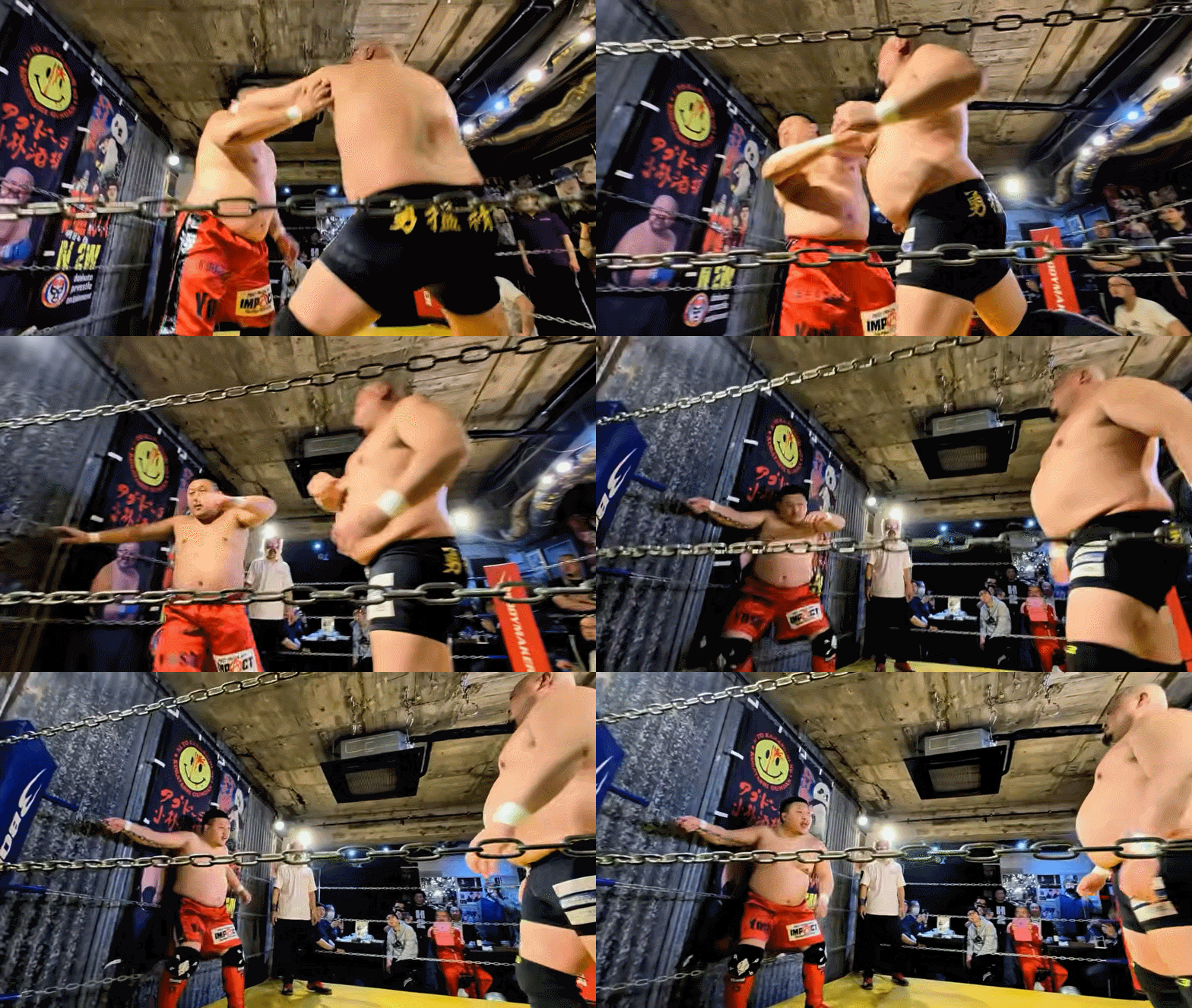
Inokiism lives on, and it can be found in the Tokyo Underground Arena, where it seems like you can get some bites with your fights. It’s a very intimate setting, and it felt a smidge past comfortable when you hear Tababa wheeze and cough after taking Gajo’s kick to the chest. On the plus side, you get to see how Tababa grabbed Gajo’s leg to pull him down with a leglock while Gajo tried to choke him out with it in the corner.
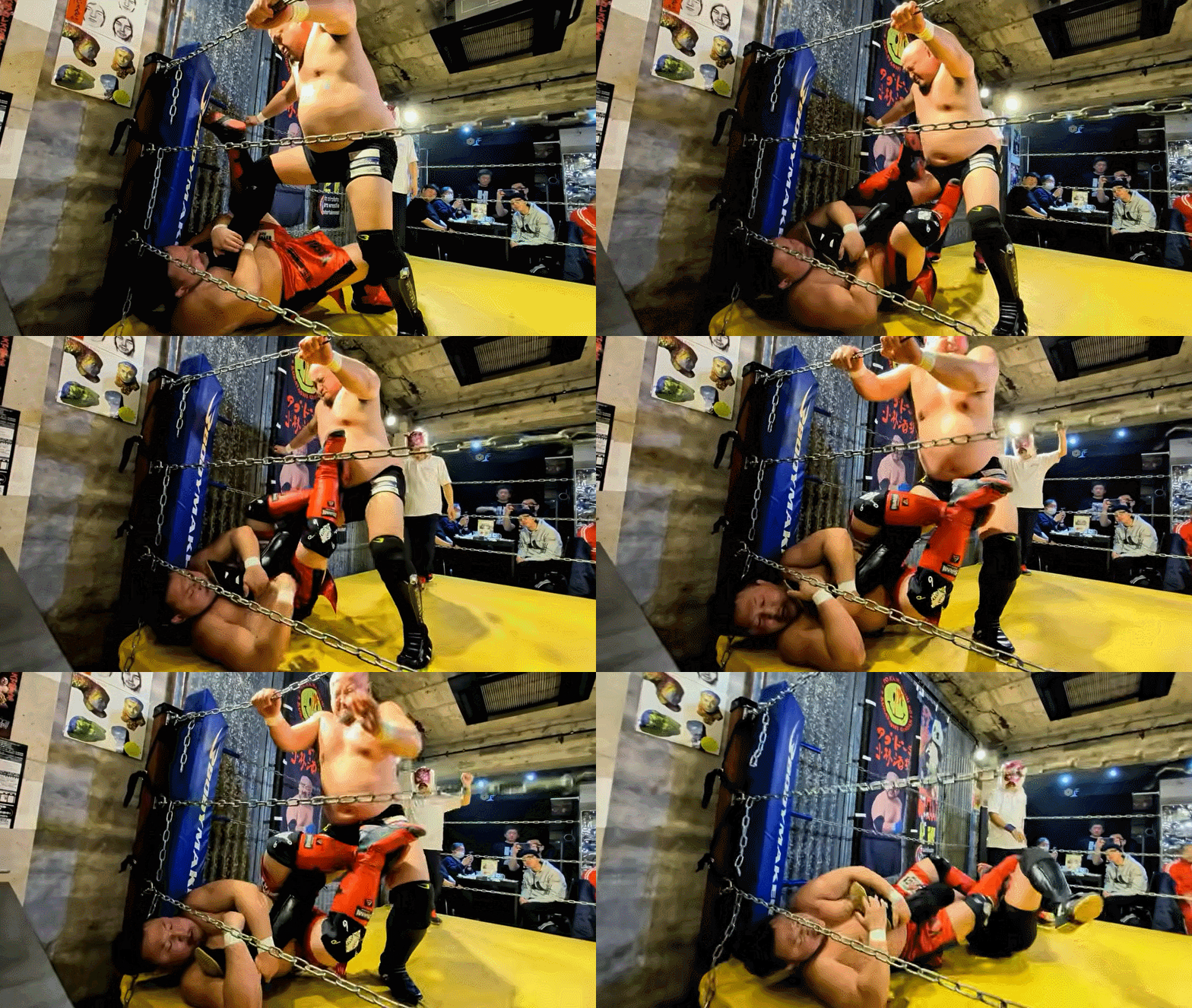
The intimacy of the setting made the sight of Gajo bleeding from the forehead after Tababa grounded and pounded him with elbow strikes shocking. (It also revealed that safety standards around bloodborne pathogens in Japan are very different than those in the United States.) I wasn’t expecting Tababa to gig himself after Gajo headbutted him and kicked him in the forehead. (The way Tababa laid on the mat after Gajo’s kick made it pretty obvious though.) Bloodied and unbowed, Gajo and Tababa swung for the fences, Gajo with his wobbly, clubbing strikes at Tababa’s head and Tababa’s jumping elbow strike to Gajo’s face. Knocked to their knees, Gajo and Tababa hit some shoot headbutts that made me wince. The match ended the only way it could have: in a double knockout after they bashed each other’s faces with some last slaps that straddled the line between the worked and the shoot.
Could you probably see a “better” MMA fight at your local independent MMA league? Probably, but that fight won’t have the chemistry and flow that Gajo and Tababa brought here or some of the wackiness that we saw, like the way Gajo spun his entire body with a swinging punch so that he could set himself up for taking a slap from Tababa that would lead to the double knockout conclusion.
You can watch the match on 小椋綾乃’s (Ayano Ogura, according to Google Translate) YouTube page. It’s 10 minutes long, and there are worse ways to spend 10 minutes.
Shu Asakawa vs. Kohei Kinoshita
KOBE Meriken Pro-Wrestling
January 16, 2026
Cagematch ranking as of 2/1/26: N/R
According to Google Maps, a six hour drive west away from the Tokyo Underground Arena will take you to the Motomachi Ringsoul, the home of KOBE Meriken Pro-Wrestling’s weekly Friday night shows. Kohei Kinoshita, who was an honorable mention in 2025’s 30 Under 30 and whom 30 Under 30 voter Chris Gascoigne ranked at #7 in their list, had my attention. In their blurb about Kinoshita, Gascoigne wrote “Kinoshita has a cool look and an explosive style of wrestling which made him one of my favourites of the ‘sleaze scene.'” So, I’m intrigued to explore the sleaze and the muck to unearth the possible gem that is Kohei Kinoshita.
What a difference camera placement can make. Where the camera for Tababa vs. Gajo was ringside, the camera, presumably a GoPro, for KOBE Meriken shows is from a security camera’s angle. This gave the KOBE Meriken matches a little more physical and emotional distance.
Ringsoul was much more raucous than the Tokyo Underground Arena; it reminded me in the best ways of La Boom, a nightclub that served as Evolve’s home base in New York City and the site of WWNLive’s contingent of shows during the 2019 WrestleMania Weekend.
Asakawa came to the ring with a bamboo training sword, but he opted to just jump Kinoshita before the bell rang. Kinoshita showed great gumption, taking Asakawa’s beating and doling out some pain of his own even though he was physically much slighter. Asakawa would trap Kinoshita in a submission hold, and Kinoshita would try to reach the ropes to break the hold only for Asakawa to catch Kinoshita’s hand or foot and block the break. That would force Kinoshita to find other ways of breaking the hold, like throwing his body in the direction of the rope so he could land on it with his head.
The very small ring meant that Asakawa didn’t even have to (or wasn’t able to) run for his elbow drop across Kinoshita’s chest.
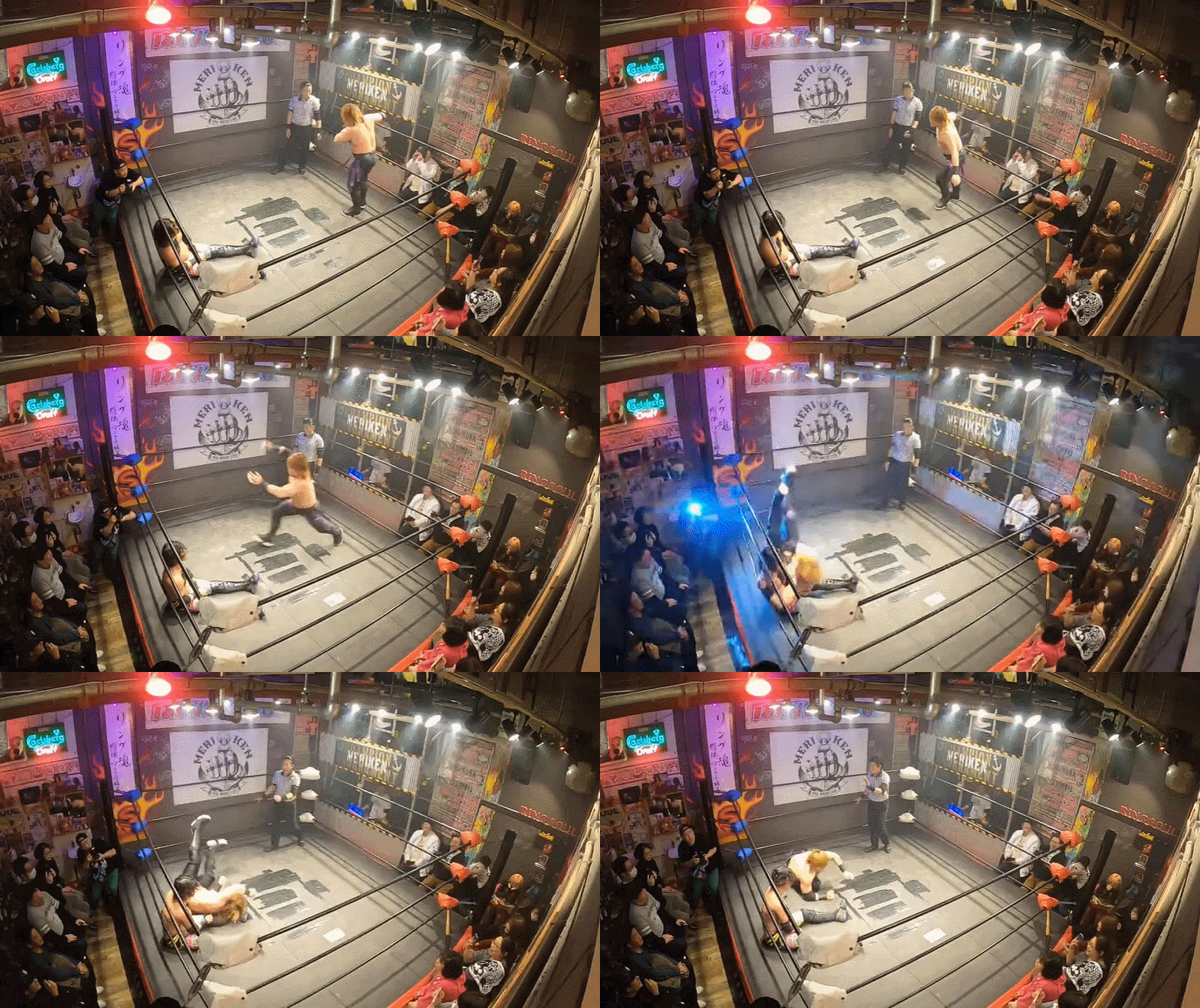
After being on defense for so long, Kinoshita got his first bit of offense by slipping out of Asakawa’s grasp and nailing him with an enzuigiri.
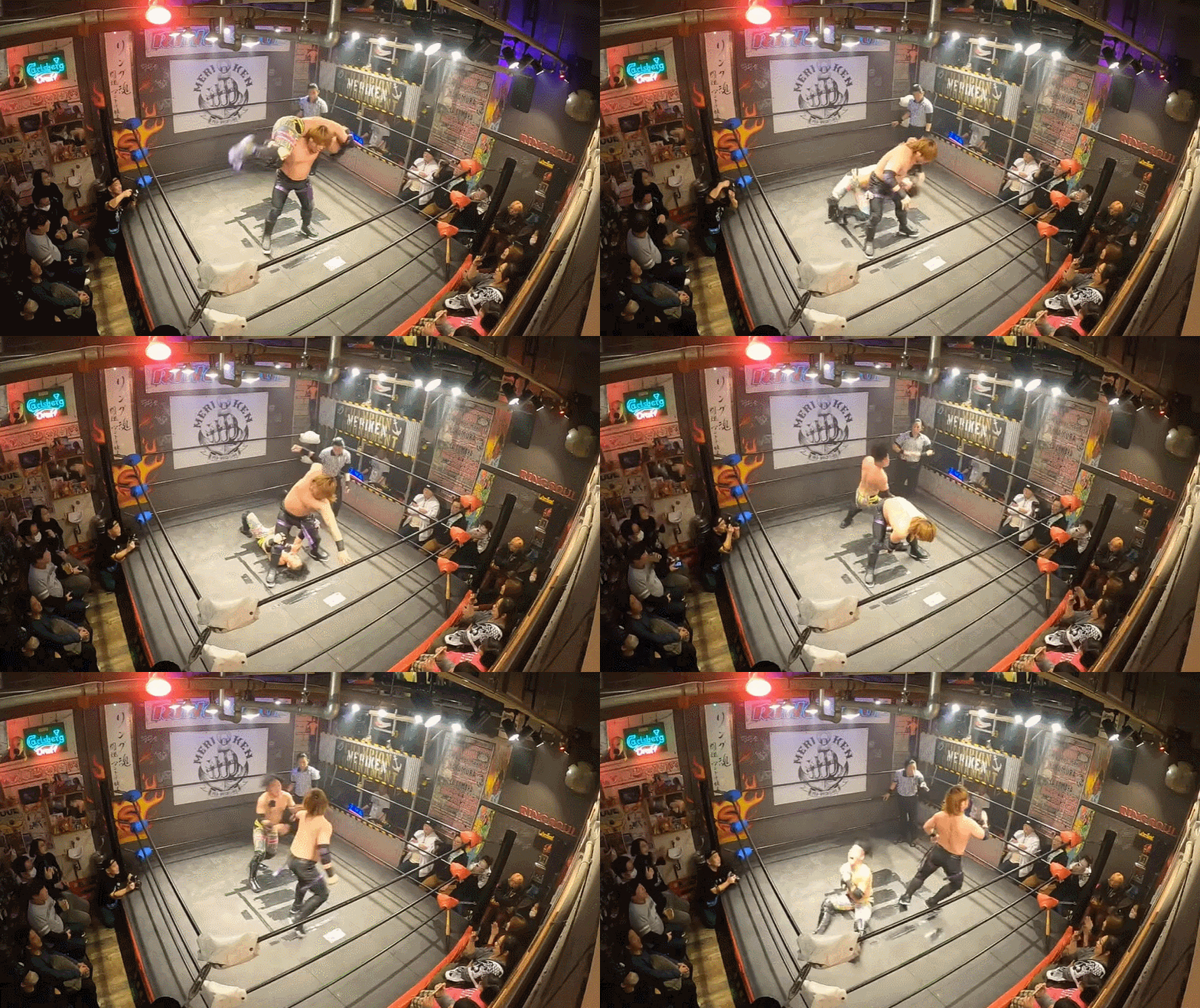
The fact that the attendees, one heel-loving fan notwithstanding, rallied behind Kinoshita really helped Kinoshita’s credentials as a plucky underdog.
Kinoshita and Asakawa packed a lot into their ten minutes: a heel beatdown segment, a plucky underdog face comeback, Asakawa’s attempt to cheat using his bamboo training sword, Kinoshita wresting that sword away, Kinoshita accidentally squashing the referee between Asakawa, whom Kinoshita dropkicked, and the turnbuckle, and Kinoshita failing the morality test by trying to use the bamboo training sword against Asakawa and getting a blow to the groin and a Death Valley Driver for his troubles. We even saw Kinoshita fire up after Asakawa threw him with a judo toss and take a flip bump in the tiny Meriken ring from Asakawa’s lariat.
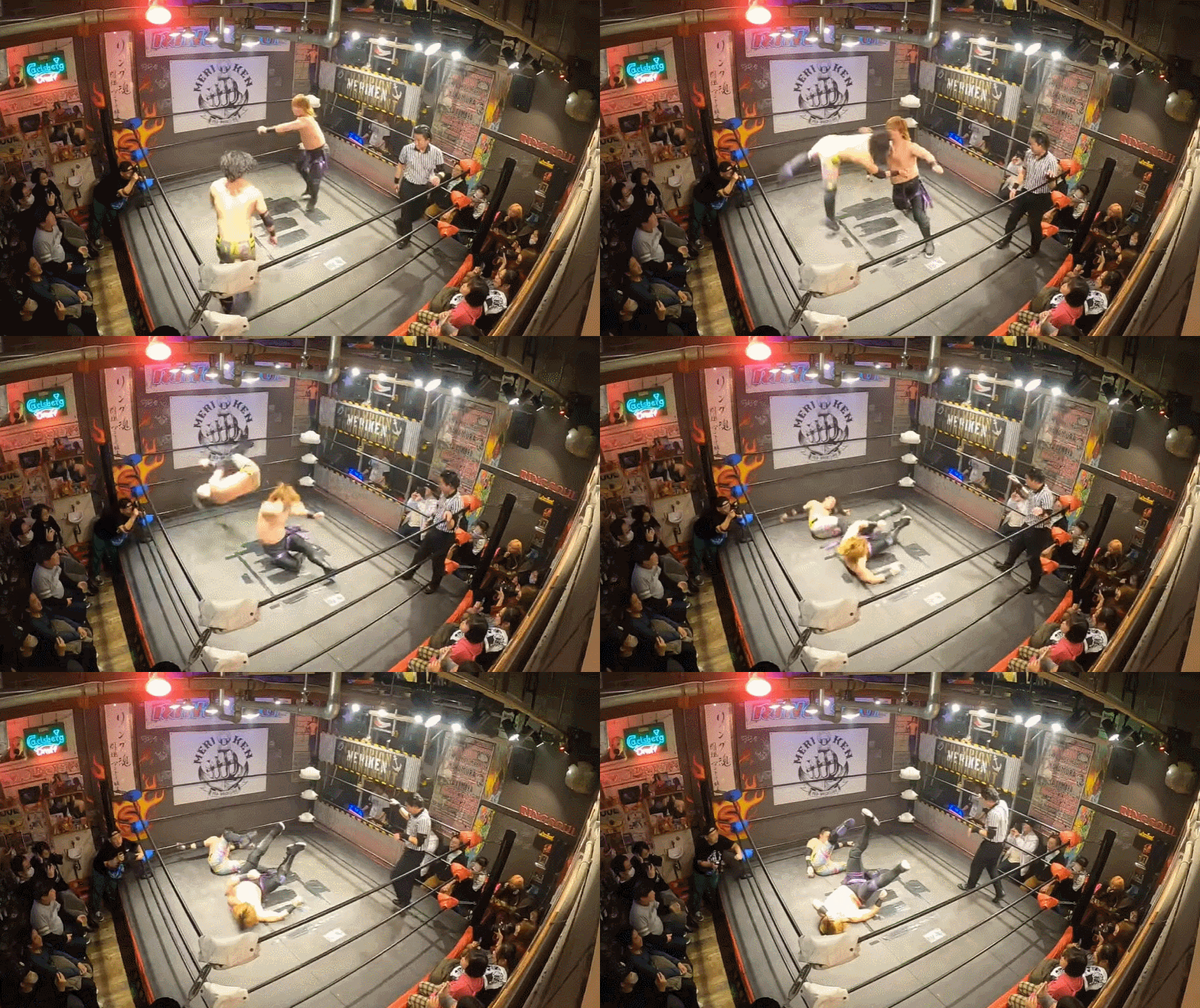
Fortunately for Kinoshita’s fans, he was able to slip away once more and plop Asakawa down with a German suplex to win the match.
I can see from this match that Kinoshita was able to garner sympathy very well; I really appreciated the way Asakawa blocked Kinoshita’s escape attempts in the submission holds, which forced Kinoshita to find different ways to reach the ropes. Kinoshita was slight and slippery, and that worked well for his size. (I was stunned to learn that Asakawa and Kinoshita are the same height; Asakawa seemed taller in the match.) I’d like to see Kinoshita in a more competitive match.
You can watch the match on KOBE Meriken Pro-Wrestling’s YouTube page. It’s less than 10 minutes long, and Asakawa and Kinoshita were able to stuff a lot into this sprint.
Ali Najima & Ryutaro Ono vs. Masanori Kanu Watanabe & Yuta Oya
Sportiva Entertainment
January 7, 2026
Cagematch ranking as of 2/1/26: 86
Heading back east for about three hours will take you to Sportiva Arena, which hosted Sportiva Entertainment, Pro Wrestling ZERO1, Dove Pro Wrestling, HEAT UP, Pro Wrestling Team DERA, and (somehow) ICW No Holds Barred shows in 2025. Like the Tokyo Underground Arena and Ringsoul, Sportiva Arena is also a bar; like Ringsoul, Sportiva Arena has a logo from a prior age of design.
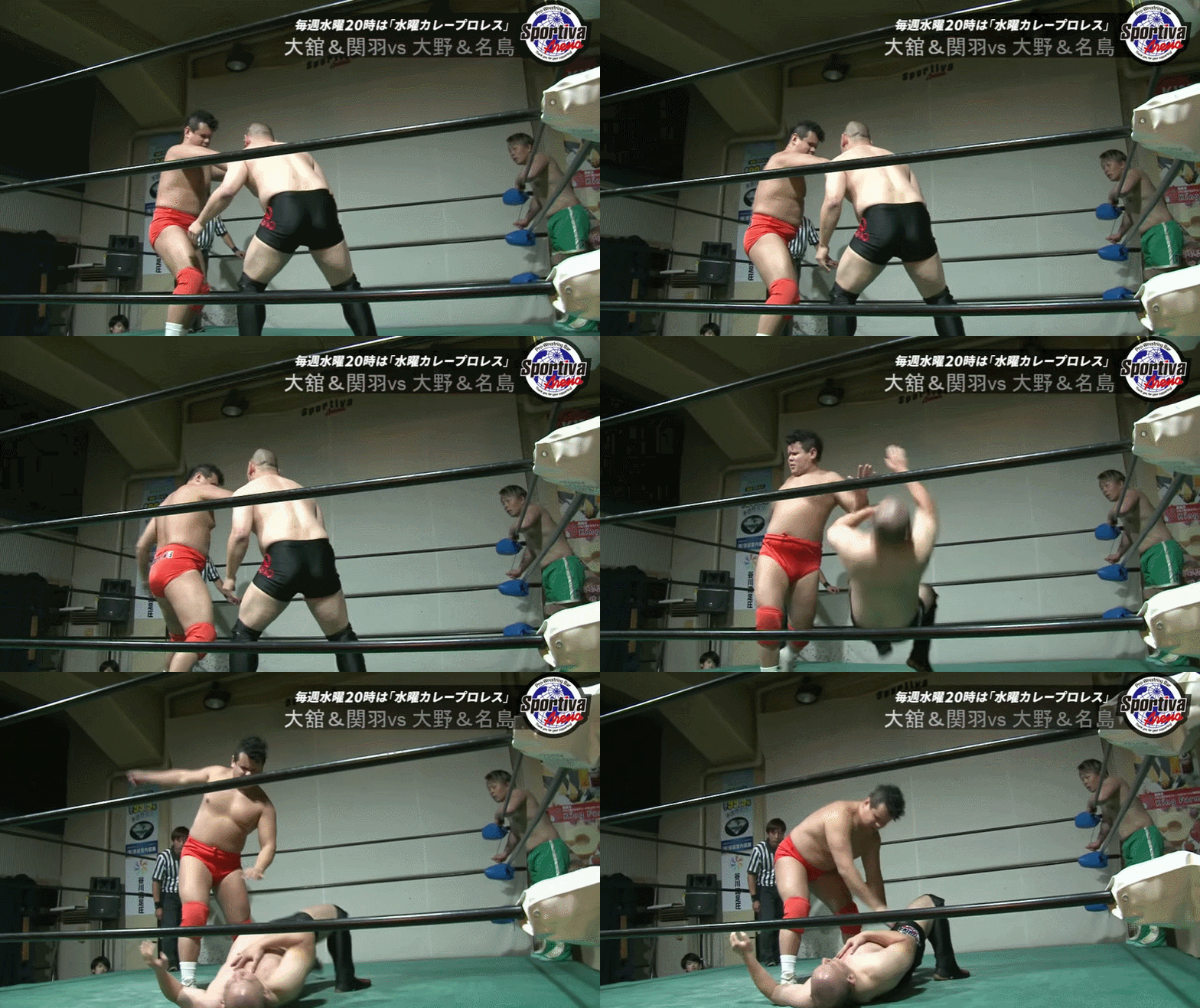
It cracked me up to see Ryutaro Ono go through the opening handshakes and then jump Watanabe and Oya before the bell rang only to immediately get his comeuppance because Ali Najima did not join him, meaning that all Ono accomplished was get himself trapped in his opponent’s corner while they battered him 2 on 1. Ono was able to push Oya toward Najima so Oya and Najima and Watanabe and Ono could pair off in their brawl around the bar in Sportiva Arena. Watching this match in the Sportiva Arena bar must feel like watching subway acrobats perform in a train car: you’re pretty sure that you’re not going to get nailed by an errant kick, but you can’t say that you’re 100% sure, and that’s part of the thrill.
Ono and Watanabe found their way back to the ring, and Oya and Watanabe continued to double team Ono by trapping him in the corner so Oya could hit some decent looking machine gun chops on Ono. Oya really measured Ono for his chops, and I appreciated that he tried to pin Ono three times before flipping him over for an ankle lock.
 ,
Watanabe tagged back in to throw some elbow strikes at Ono’s face. Between the elbow strikes and his uppercuts earlier, it felt like Watanabe fell into the same pitfall that claim many former MMA fighters, even relatively unsuccessful ones like Watanabe (2-5-0 according to Tapology and Sherdog): the punches, elbow strikes, and uppercuts look weak possibly because Watanabe felt that he had to hold back so he didn’t accidentally actually hurt his opponents. Watanabe’s kicks looked better than the the elbow strikes and uppercuts. I winced when I saw Watanabe land on his heels on Ono’s suplex though.
Najima got the hot tag from Ono and capped his stretch with a good penalty kick on Watanabe. Oya tagged back in, and you have to admire the commitment to the Irish whip.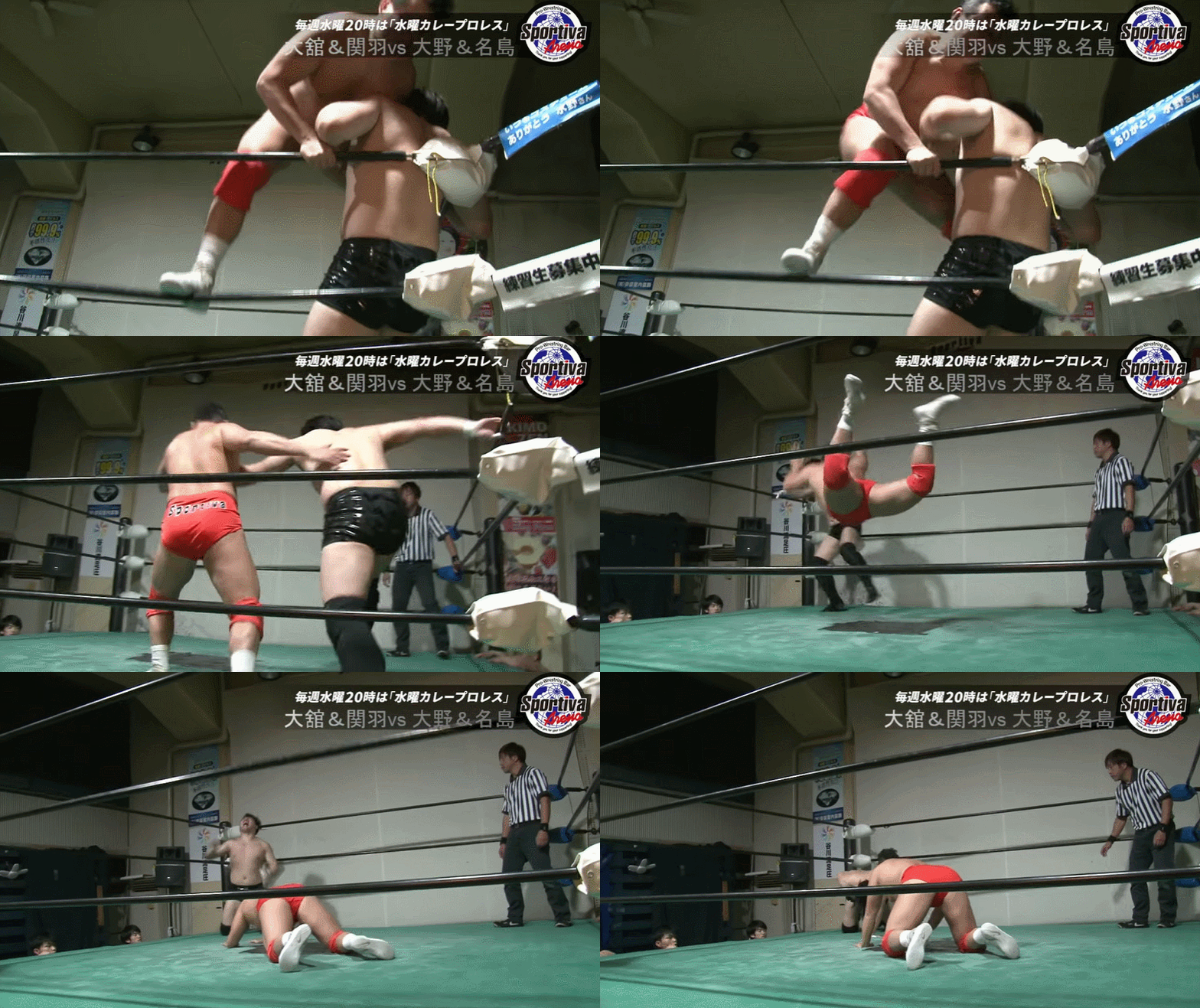
From there, Najima and Oya gave us some good ol’ fashioned grappling, all of it seemed clean and impressive for a 41-years-old rookie. It became even more impressive when we factor that Oya is blind. From JamieOD’s description of Oya on Dramatic DDT:
Yuta Oya is from Sportiva Entertainment and only debuted in July 2024 which made headlines because he is blind. He had cancer as a child that resulted in his right eye being removed and radiation therapy being needed to save his left eye. He had taken up judo in school and wanted to become a pro wrestler but had to give up that dream when he eventually lost sight in his left eye and became fully blind. He was then diagnosed with bladder cancer in his early 30s which made him want to become a pro wrestler to teach his son you need the determination to never give up while pursuing what you love.
The match moved into its peak as Oya and Watanabe once again whooped on Ono, which finally got Najima to enter the ring without a tag. Ono and Najima took control, and I liked the way Ono kicked Watanabe’s back to soften Watanabe for his Boston Crab. Someone who bases their offense around a Boston Crab like Katsuya Murashima should incorporate this into their repertoire.
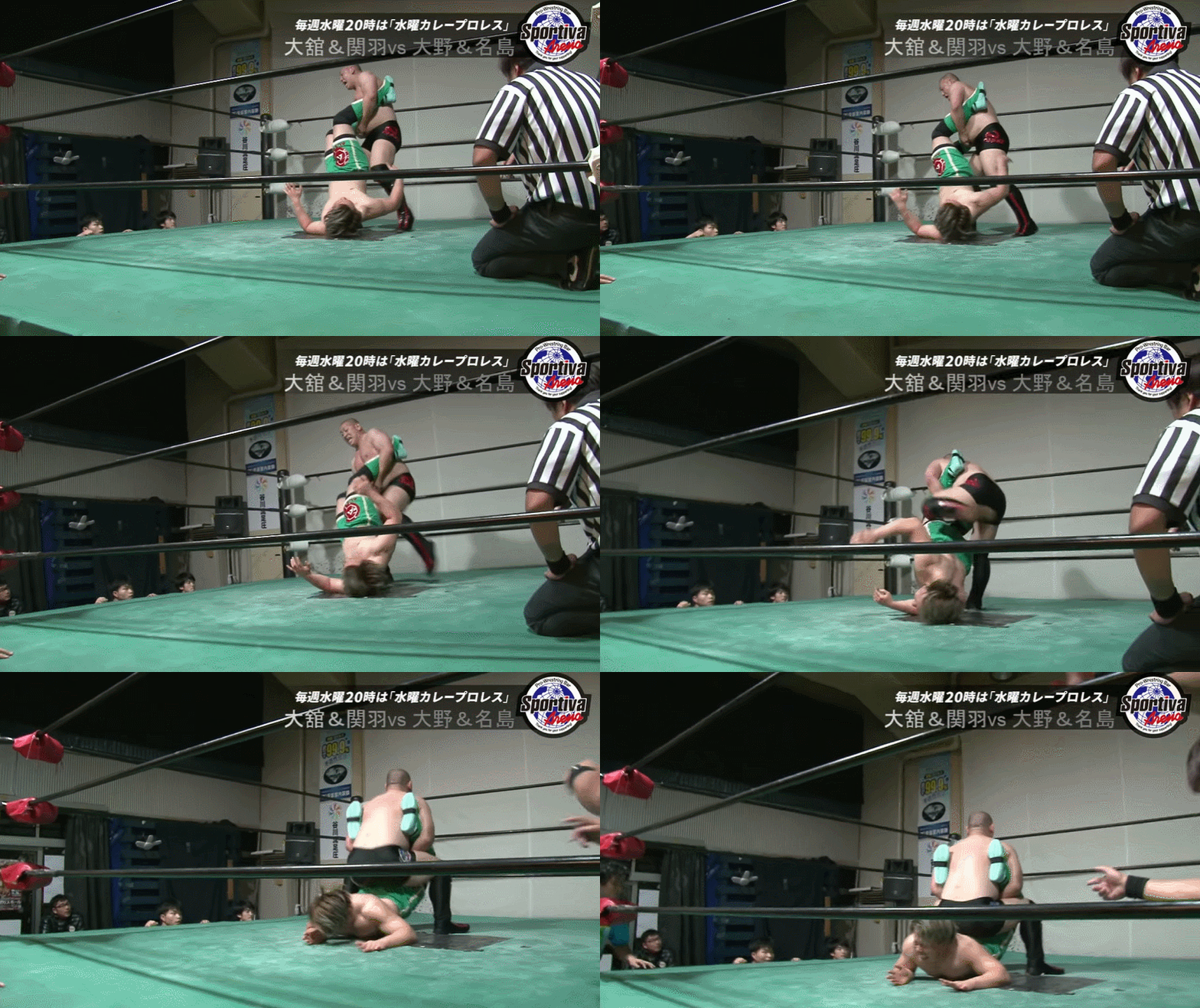
Najima took Oya out of the match with a German suplex, which left Watanabe and Ono to fight over some pins and submission holds in an engaging bit of grapplefuck. Watanabe used his MMA experience to twist Ono around to capture his leg to force the submission.
There was a pleasant physicality throughout the match, particularly from Oya, who did a lot despite his blindness. It did break the suspension of disbelief to see him grope the air for his opponent, but he made it work when he got a handle on his opponent. Watanabe’s highlight was his fight with Ono on the ground, and Ono brought a good level of intensity throughout the match. Najima stood out in his grappling sequence with Oya, and he provided the glue to the match that kept it together.
You can watch the match on Sportiva’s YouTube page. The match is about 12 minutes long, and it’s worth watching just to see Oya in action.
JeTank1997 (Jet Wei & Kodai Nozaki) (c) vs. Hitamaru Sasaki & Minoru Tanaka
Kyushu Pro Wrestling
January 12, 2026
Cagematch ranking as of 2/1/26: 77
We’ve spent a lot of time in bars that also hold wrestling matches, so it’s time to head west for about 10 hours to Tobiume Arena aka the Dazaifu City General Gymnasium, a building that was actually built for sports and to be an emergency shelter. It’s a fixture of the community; the architect’s Web site boasts that they “worked with local elementary school students to create a 15-meter chain of soap bubble art and displayed in the entrance hall.” According to Cagematch, almost 1,000 attended this show, and it came across on screen; I was shocked to see so many people, particularly children, at a Kyushu Pro show. I also couldn’t believe that this Kyushu Pro show was available at 2160p60 4K on YouTube. By contrast, Ring of Honor uploads clips at 1080p60 HD, and Limitless Wrestling, Pro Wrestling Australia, AEW, and WWE upload clips at just 1080p. And though this Kyushu Pro show was shot on a handheld camera, the footage was very smooth. Overall, I was very impressed by Kyushu Pro’s production quality.
(Fun fact: Minoru Tanaka has a TVTropes page, and it states that Tanaka “was Battlart’s resident good-looking kid.” Tanaka is currently 53 years old.)
This match for the Kyushu Pro Tag Team Championship was a battle of champions: Jet Wei and Kodai Nozaki defended their title against the Sasaki, the Kyushu Pro Champion, and Tanaka, the GLEAT G-Rush Champion. I cracked up when Sasaki and Tanaka posed with their belts before they entered the ring. The belts themselves may not rank at the top of any list of the best-looking belts ever in wrestling history, but Tanaka and Sasaki are proud of them and proud that they’re champions, and that means more than the fact that they look like toy belts.
Kodai Nozaki is a beefy fellow, so the contrast with the slim Jet Wei is comical. Nozaki and Wei also honorable mentions in last year’s 30 Under 30, and Gascoigne had ranked Nozaki at #4 and Wei at #12. Regarding Nozaki, Gascoigne wrote “He looks a bit sedate in some of his matches, but still he is able to get a crowd going on the isle of Kyushu.” Griffin Peltier, another 30 Under 30 voter, wrote about Nozaki, “Kodai Nozaki is 5’7”, 286 lbs, and his Twitter handle is HEAVY TANK 911. This guy rocks.” Gascoigne described Wei as “a great babyface and he is a charismatic man with a good offense.”
Tanaka cracked me up again when he came in at the end of Nozaki and Wei’s pose for the press photo to Nozaki’s visible annoyance.
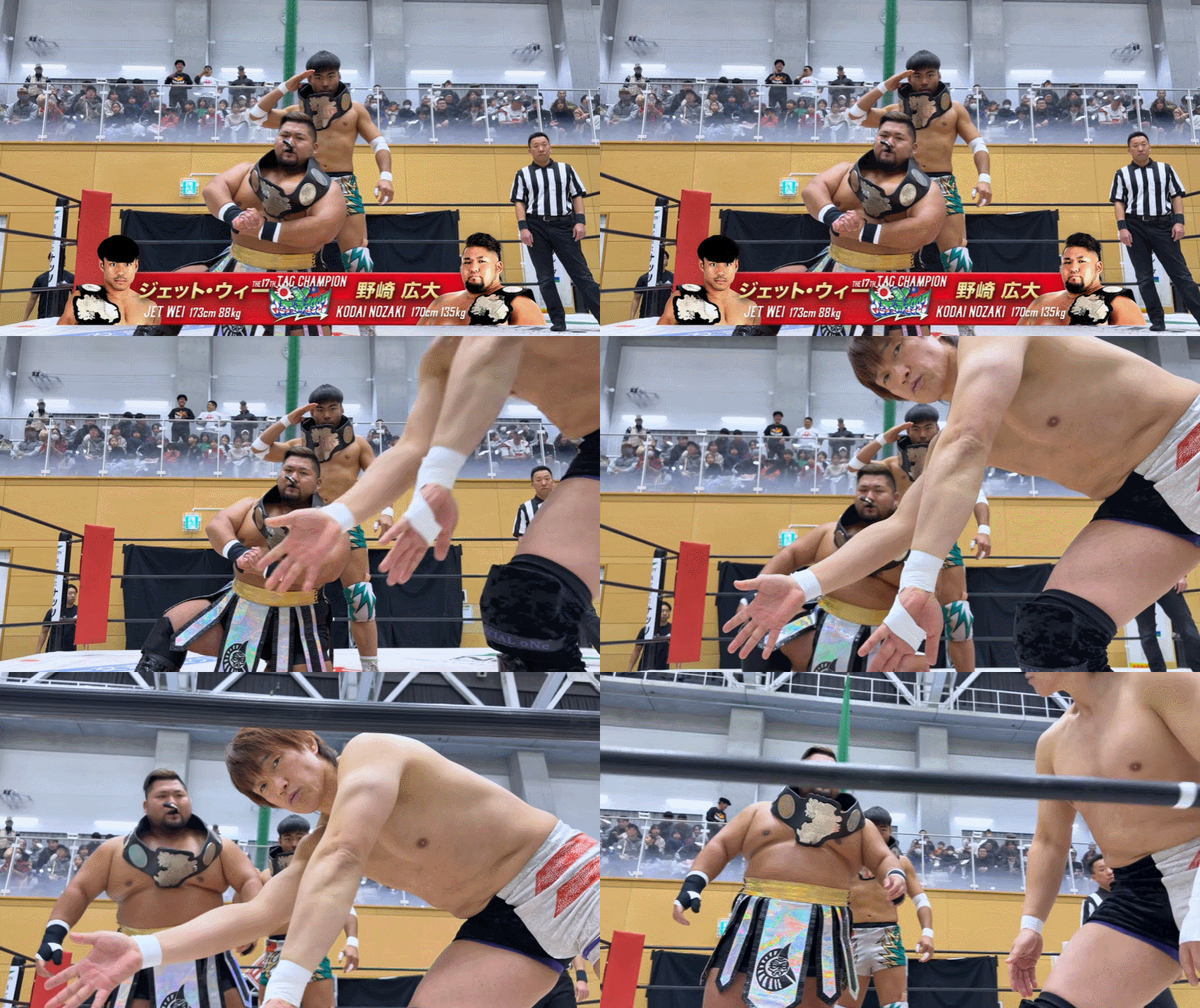
Wei and Sasaki kicked the match off with some fast-paced, serious grappling, but they gave way to the match-up that I truly wanted to see: Nozaki vs. Tanaka after Tanaka irritated Nozaki. I cackled when Tanaka pivoted Nozaki during their collar-and-elbow lock-up and gave Nozaki a clean break only to give him a quick leg check kick, which caused Nozaki to chase after Tanaka while Tanaka peppered his legs with more kicks.
Nozaki and Wei may seem like a visually comical pairing, but they made sense in action. Nozaki launched Tanaka to the ropes and planted like a brick wall for Tanaka to collide against, which then allowed Wei to propel himself over the top rope to splash on to Tanaka. Tanaka and Sasaki also worked surprisingly well together given that this is only the second time that they’ve teamed; I guess facing each other five times was enough for them to develop some chemistry.
Wei threw some good-looking elbow strikes, but Sasaki impressed me with how he caught Wei’s leg on the way down on a powerslam so he catch Wei in a leglock. Sasaki really acted like he wrenching back on the hold too, which got me invested in Wei’s brief struggle to escape.
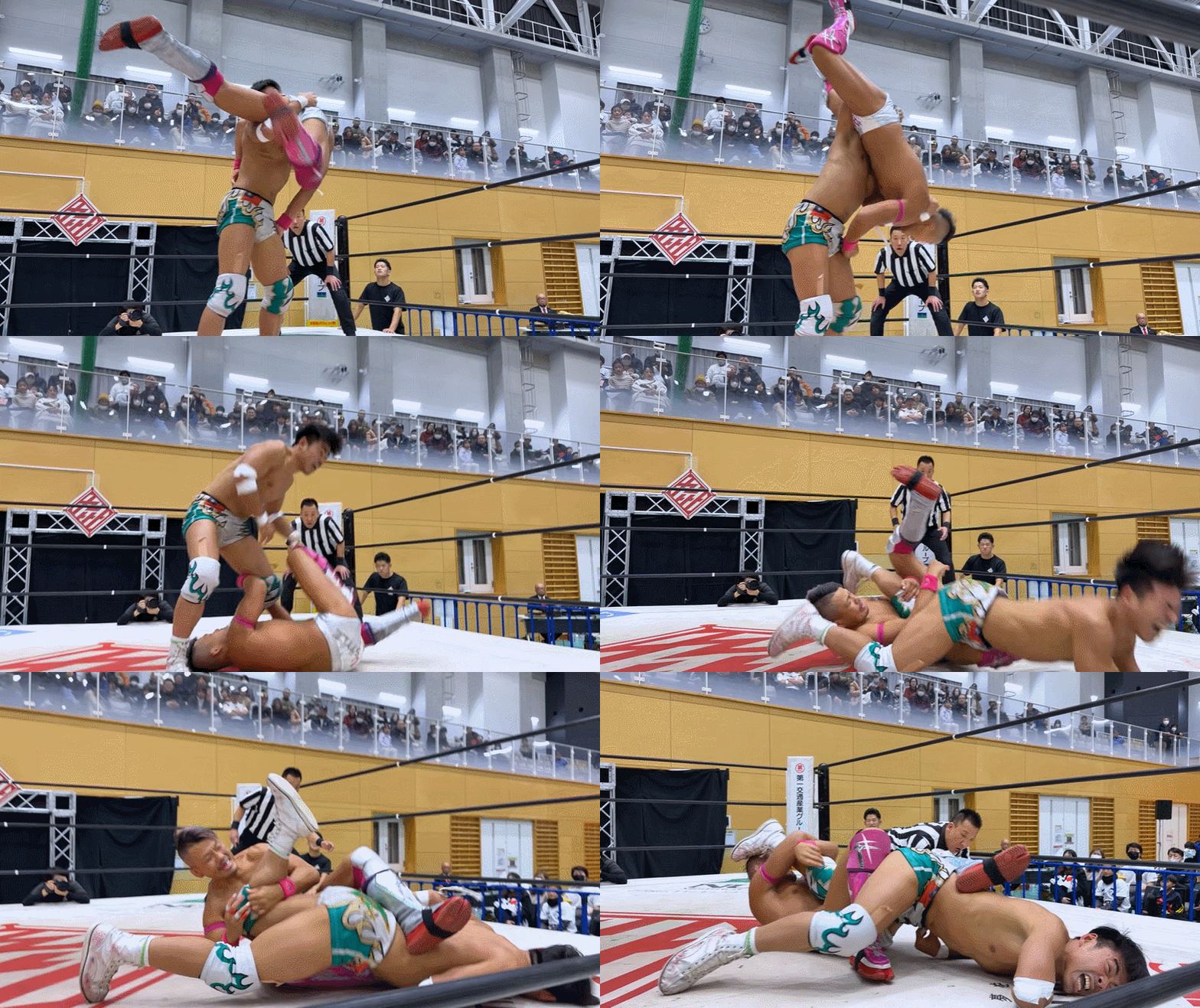
Like fellow ageless wonder Masaaki Mochizuki, Tanaka moves with the precision and crispness of a wrestler half his age. And I was highly entertained by the heel bit that Tanaka and Sasaski pulled: while Tanaka pretended to be stuck in a Figure Four Leglock with Wei, Sasaki took advantage of the referee’s distraction to apply an armbar from the apron, inflicting even more punishment on Wei.
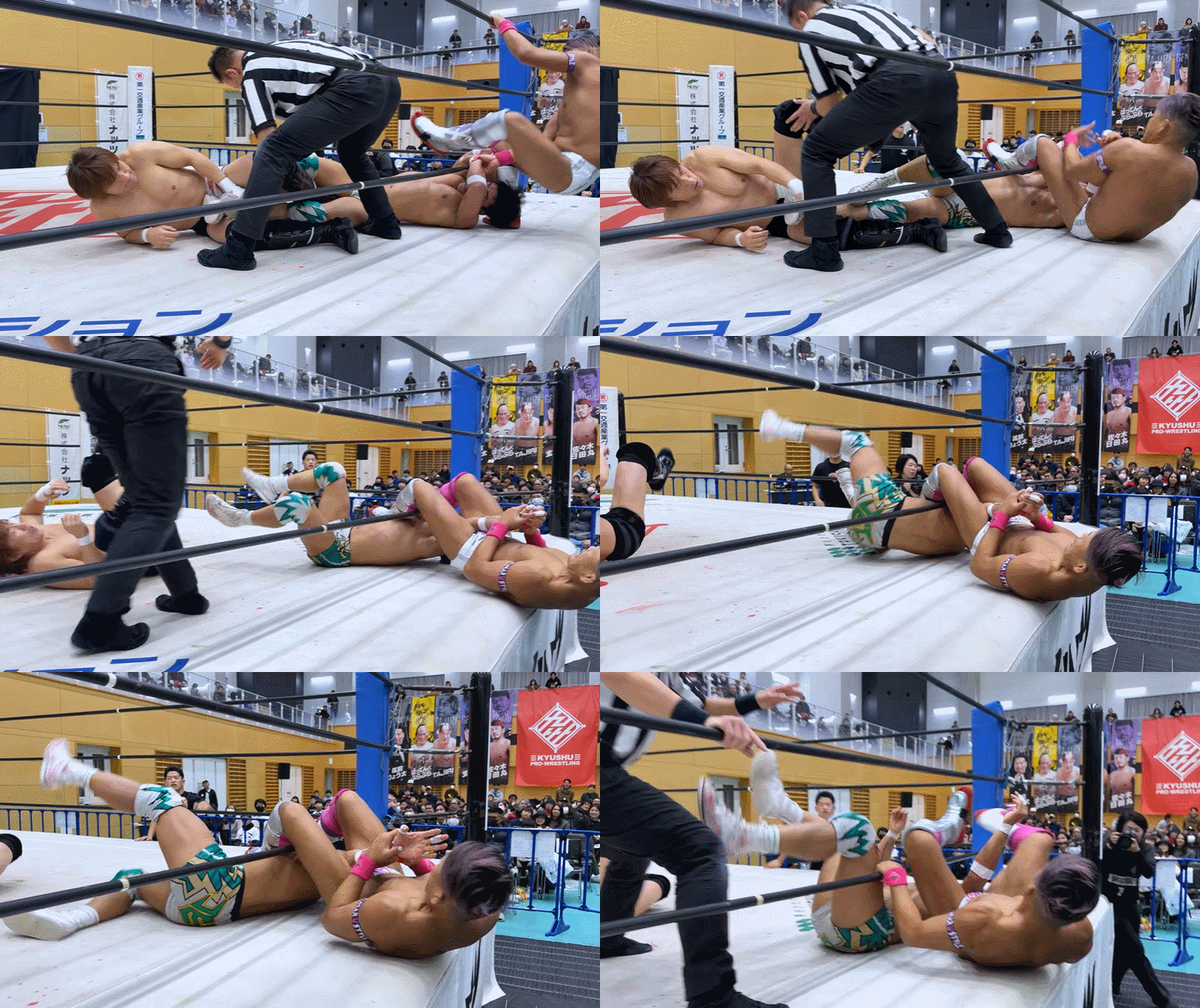
By this point, the fans were begging Wei to make the hot tag to Nozaki, and Wei and Tanaka didn’t make them wait for too long. Wei created some separation with a dropkick and tagged in Nozaki, who battered Tanaka and Sasaski with simple but effective lariats and scoop slams.
Tanaka and Nozaki gave us a fun sequence where Tanaka tried to suplex Nozaki and was able to still cut Nozaki down despite his hubris. The match gave way to Sasaki and Wei, and Wei again lived up to the name with his speed and agility, even though he (intentionally) beefs it his dive.
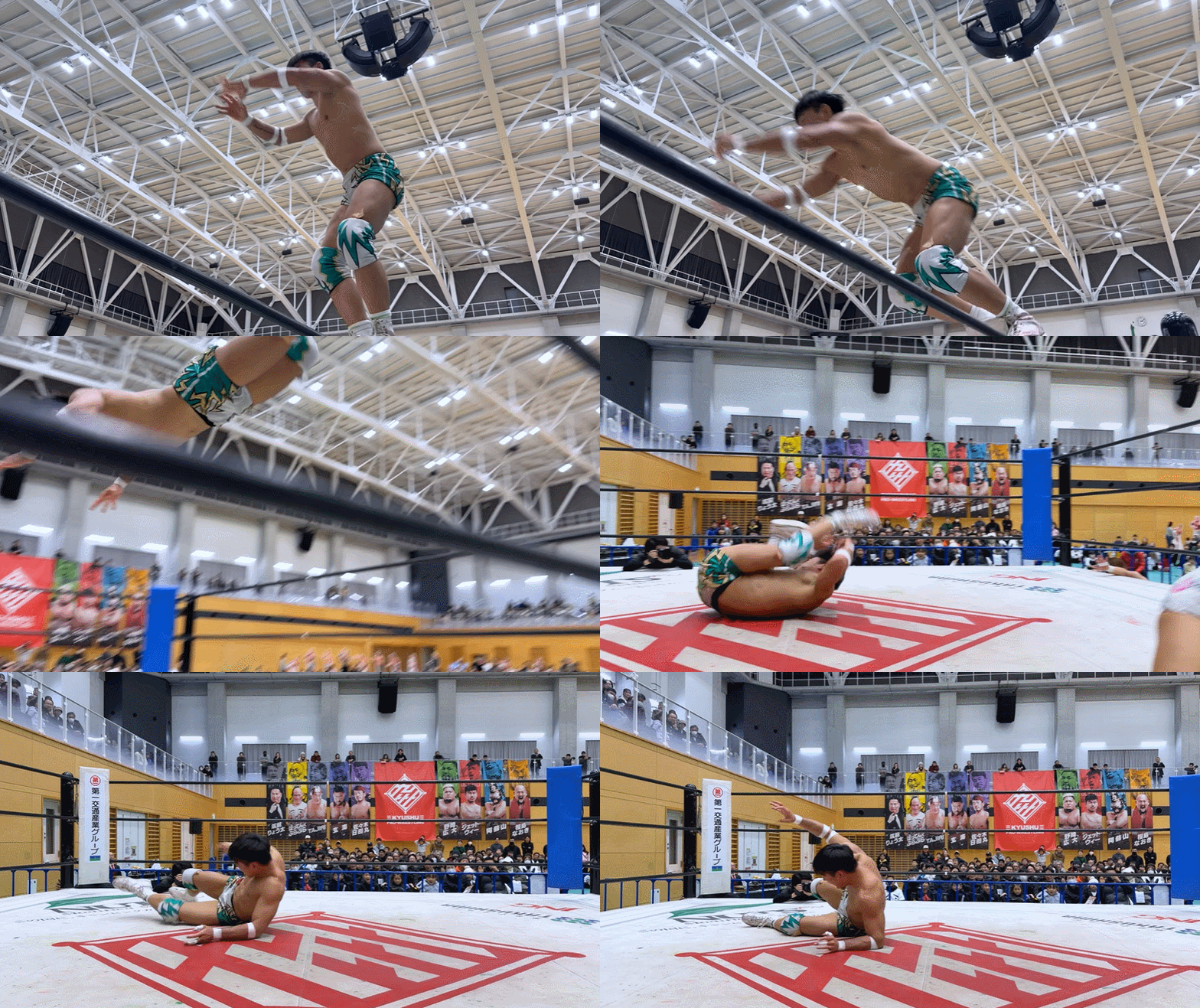
The match breaks down into a double down when Tanaka took out Nozaki with a head kick, so Wei took Tanaka out with a lariat, so Sasaki took Wei out with a jumping knee, and Wei took Sasaki out with a last gasp lariat. It did annoy me that Sasaki spent his time selling Wei’s lariat to fix his kneepad and tights, but it’s a small gripe.
After taking a walloping from Tanaka and Sasaki, Wei kicked out at about 2.8 from a Sasaki pin. By that point, Tanaka tried to take Nosaki out with a springboard dive, but Nosaki caught him and smashed him against the ringpost. Nosaki then saved Wei with a spear to Sasaki. Again, I have to emphasize how good Kyushu Pro’s camera work here. Everything was caught clearly by a single handheld camera, and the shots were stable and legible even though there were many moving parts in the sequence.
Finally, with the children firmly behind him, Wei pinned Sasaki with a frogsplash to retain the Kyushu Pro Tag Team Championship.
This wildly exceeded my expectations. From the production quality to the performances from Tanaka, Sasaki, Wei, and Nosaki, this match left me so satisfied that I subscribed to Kyushu Pro’s YouTube page and signed up for notifications. This was not state of the art tag team wrestling, but it was solid, no-nonsense, well-executed work by the four wrestlers and the camera operator. I wish Nozaki had a bit more of Yuji Hino’s brutish tendencies and powerful offense, but I was impressed by both his and Wei’s performance. Tanaka and Sasaki more than held up their end of the match.
You can watch match on Kyushu Pro Wrestling’s YouTube page. Go watch it!
Kuro (c) vs. Michael Oku
Association les Professionnels du Catch
January 10, 2026
Cagematch ranking as of 2/1/26: 64
Finally, let’s travel from Tobiume Arena 14,574 kilometers (or about 9,056 miles) north and then west across Japan, Russia, Belarus, Poland, Germany, Belgium and northeast France to arrive at Studio Jenny in Paris for Association les Professionnels du Catch’s Anniversary XXII show, which was partly headlined by Michael Oku’s challenge for the APC Championship against Kuro. APC is one of the oldest active wrestling company in France, and it was one of the homes of Elio LeFleur, the former Aigle Blanc. With Blanc now a resident in the sports entertainment retirement home, the 28-years-old Kuro is undoubtedly APC’s brightest star (and a possible nominee for this year’s 30 Under 30 list). He defeated Blanc on March 16, 2025 to became APC’s champion, and he’s defended the company against interlopers like Cedric Alexander, Zozaya, Connor Mills, Kevin Knight, Lio Rush, Man Like Dereiss, and Michael Oku. This was Kuro’s second match against Oku; their last encounter, a title for title match for both the RevPro Undisputed British Heavyweight Championship and the APC Championship, ended without a decision when Real1, Joe Alonzo, Doc Gallows and Karl Anderson interfered. (What a crew that was indeed.)
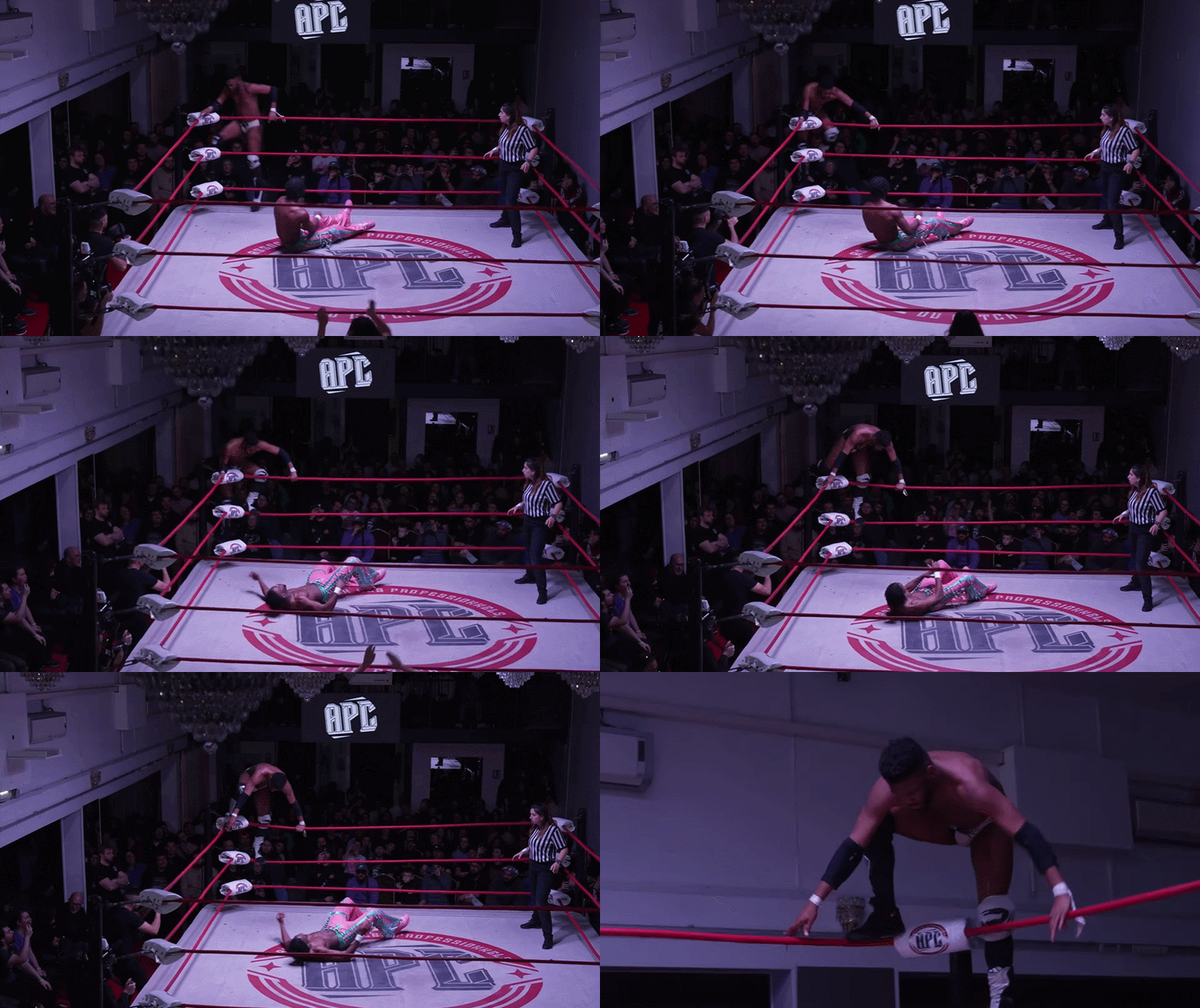
The commentary and ring announcements were, not surprisingly, in French, and chants for Michael Oku with a French accent tickled me. (The ring announcer switched to English to introduce Oku, which would undoubtedly irritate L’Académie Française if it were aware of APC at all.) Unlike the crowd at Kyushu Pro, which was notably filled with children, the crowd at APC was decidedly composed of young men. Studio Jenny is a reception hall with a balcony, so, APC is able to shoot the show with a hard camera on the balcony above the wrestlers’ entrance and a handheld camera on the floor.
Credit goes to Kuro for using the opening strains of Kendrick Lamar’s “Not Like Us” before switching to his “Mr. Hype” entrance theme. Where Oku goes, Amira must also be there, and this was no exception, though I can’t imagine that Oku was happy that Amira was dancing with Kuro during his entrance. Kuro’s “Mr. Hype” entrance theme was easy for the crowd to grunt along to, so Kuro just needed to be passable in the match itself to join LeFleur in the sports entertainment retirement home. He certainly had the drawn-out pre-match routine, from a song that had to play all the way through so the fans could go “Ooh oh oh Whoa” for several interminable minutes to teasing fans with removing his jacket for about 40 seconds before he finally did so while Oku looked on looking bored.
It all paid off when Oku opened the match with a running dropkick to Kuro’s face that kicked off an elbow strike battle that ended with a dropkick from Kuro. Kuro traded a flipping senton dive for Oku’s Fosbury Flop, and Oku controlled Kuro until Kuro countered a Tornado DDT with a backdrop driver into the bottom turnbuckle. Amira advised Oku to leave the ring, and Kuro foolishly followed, which got us to the next stage of the match where Kuro ate a pair of boots to the face and gave Oku a Deadeye (aka the Hangman’s Delight” on the apron.
One could chart wrestlers’ and wrestling companies’ influence by where certain moves have proliferated. It’s one thing for Jus x Nic and Prince Kxriuki to use Okada’s Rainmaker Lariat and Page’s Buckshot Lariat in their opening match at New Texas Pro Wrestling’s Texas Contenders Series because they live in the United States, where AEW airs on TBS, a readily available cable television station. Okada and Page have both wrestled in Texas, so it’s conceivable that Jus x Nic and Prince Kxriuki saw them in person at some point. “Hangman” Adam Page has yet to wrestle in France, and AEW supposedly airs on Warner TV Next in France. Nonetheless, AEW apparently has enough cultural penetration that Kuro saw Page use the Deadeye and incorporated it into his own arsenal.
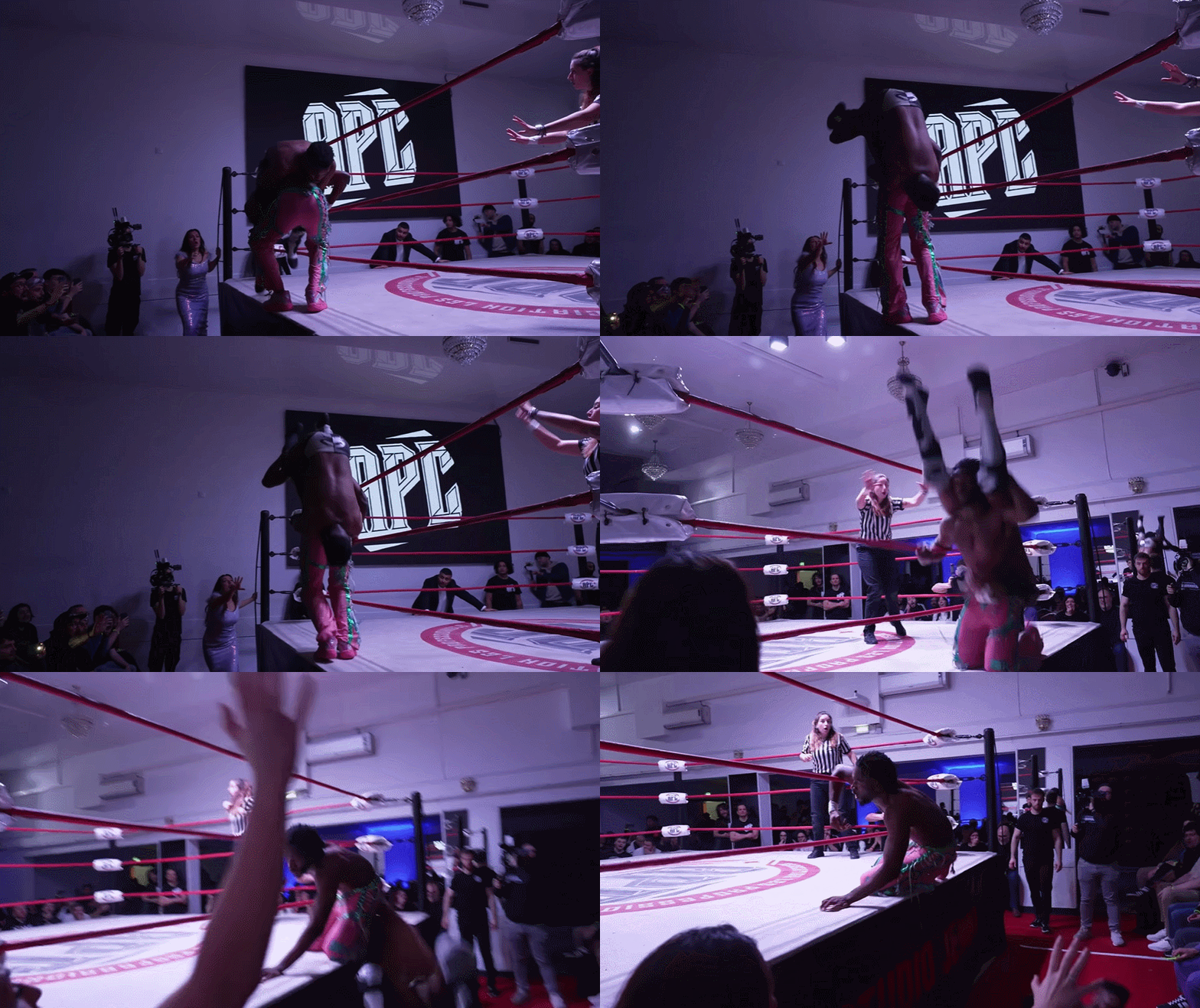
Oku’s pace, which can be charitably described as deliberate, irked me at two points in the match. After recovering from the Deadeye, Oku countered a dive from Kuro with a superkick and then nailed a kneeling Kuro with another superkick. Kuro kicked out of Oku’s pin, and instead of keeping the pressure on Kuro, Oku kneeled to emote and to, in theory, listen to Amira’s coaching. Later in the match, after setting up Kuro’s leg so that it would be caught after he landed a neckbreaker, Oku again sat in the furthest corner from Kuro while the referee and Amira checked on Kuro. I would have preferred if Oku had shown the same urgency and killer instinct that he showed at the start of the match when he rushed in with a dropkick. The APC Championship was at stake, and though Oku targeted Kuro’s leg after the neckbreaker, I wish Oku consistently wrestled with a relentless championship drive. Later, Oku laid to catch his breath after Kuro kicked out of his half Boston Crab so the crowd could chant, which again felt like a counterintuitive choice to slow the match’s pace.
Kuro started his comeback by blocking Oku’s Frogsplash with his knees, as one must when his opponent has targeted your knee throughout the match. A punchdrunk elbow strike exchange led to a bucklebomb from Kuro, and Oku’s attacks on Kuro’s leg don’t matter if Kuro could plant his feet and throw lariats at an oncoming Oku. Kuro mostly contained his selling to after he would hit his offense, like how he clutched at his leg after he landed his cradle Tombstone Piledriver. (Since he’s already borrowed Page’s Deadeye, could Kuro have been inspired by Kris Statlander’s Big Bang Theory?) Carrying Oku to the middle of the ring on his supposedly injured leg so that he could face APC’s hard camera was a bit ridiculous.
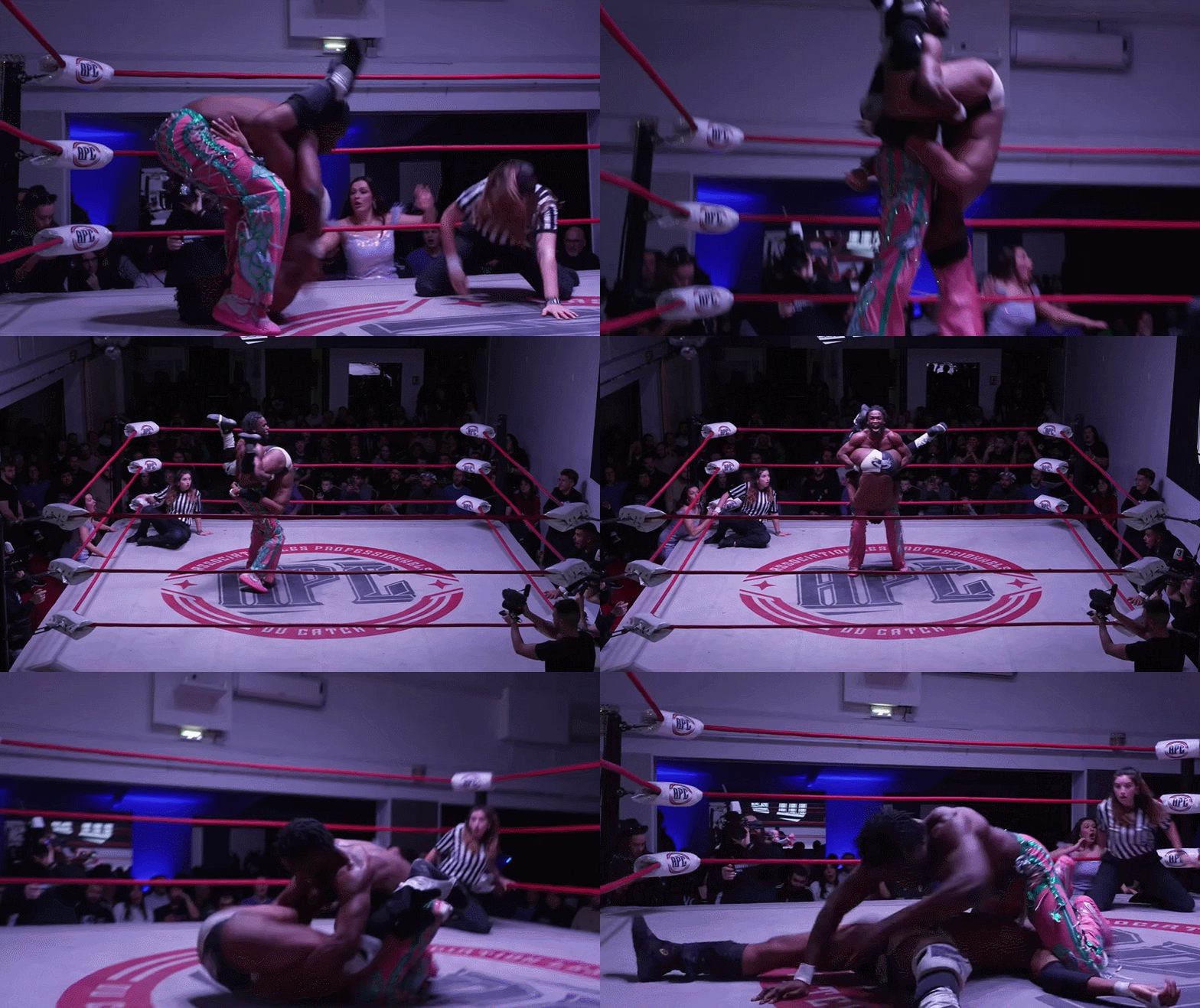
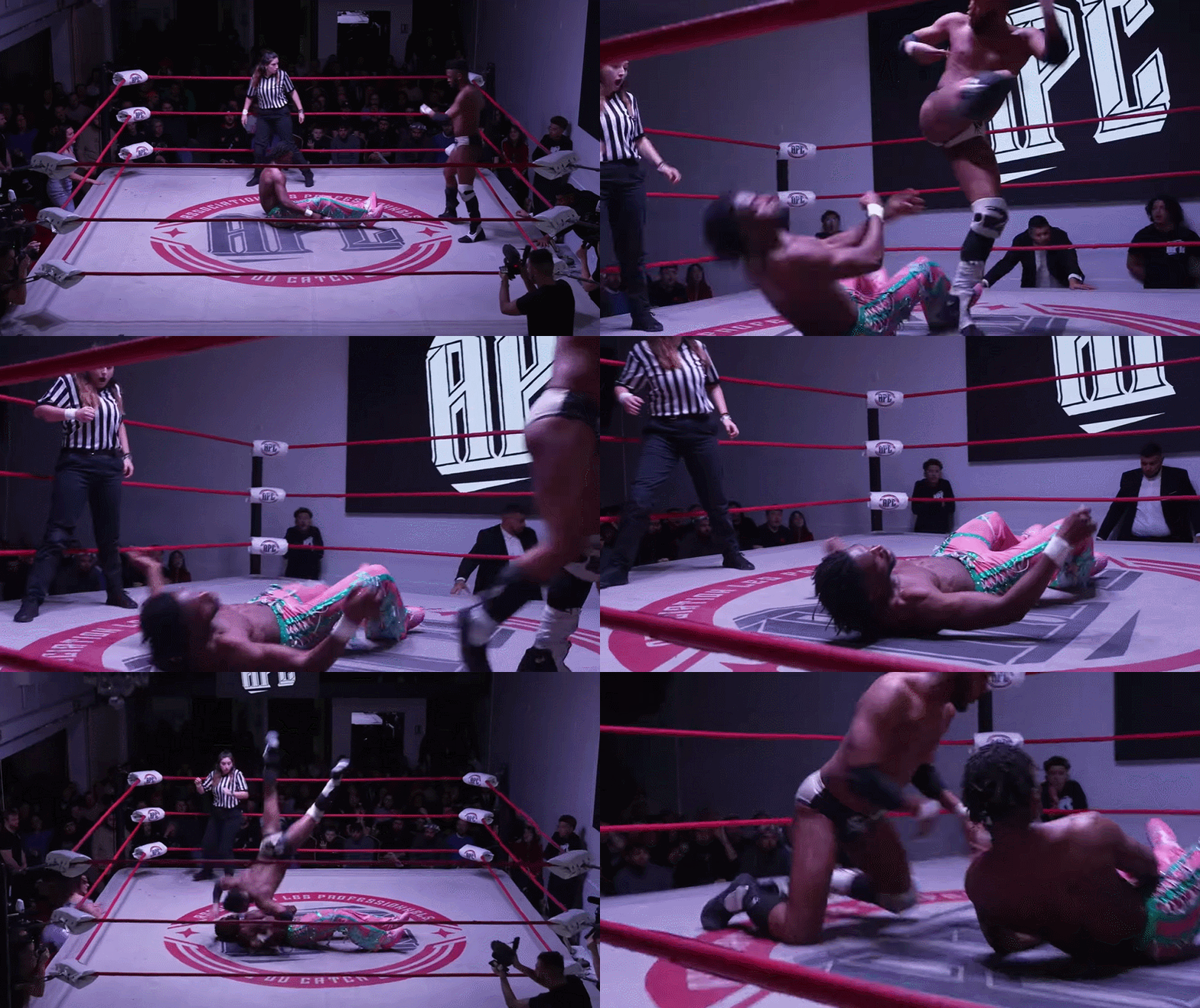
In the end, Kuro and Oku exchanged one-count kickouts (Kuro after Oku’s frogsplash, Oku after Kuro’s driver), and I could have sworn that the commentator was talking about capitalism because Kuro ultimately finished Kuro with a Rainmaker Lariat. The crowd was happier with the match than I was. Oku endorsed Kuro with a handshake at the end.
You can watch the match on APC Catch’s YouTube page. I wish Oku wrestled with more urgency throughout instead of trying to beat our expectations by slowing the pace and then exploding from the lulls. Kuro seemed to have issues with his positioning on the mat a couple of times for Oku’s moves because he had to scooch his body so Oku could land on him. I don’t know if the fault lies with Oku or Kuro, but it became hard to ignore by the third time Kuro had to move his body and impossible to ignore the fourth time.
If we had to start my ranking of wrestlers under the age of 30 that we’ve seen so far in 2026, the list would probably start with:
1. Jet Wei
2. Kodai Nozaki
3. Kohei Kinoshita
4. Kuro
Next time: “All this time I spent walking in deserts of mirages
Yeah, yeah, yeah, yeah, uh”
– Sage The Gemini featuring Berner and Kehlani, “Desert of Mirages”
We’ve made it through the sleaze (mostly). Is what I see before me real or a MIRAI-ge?